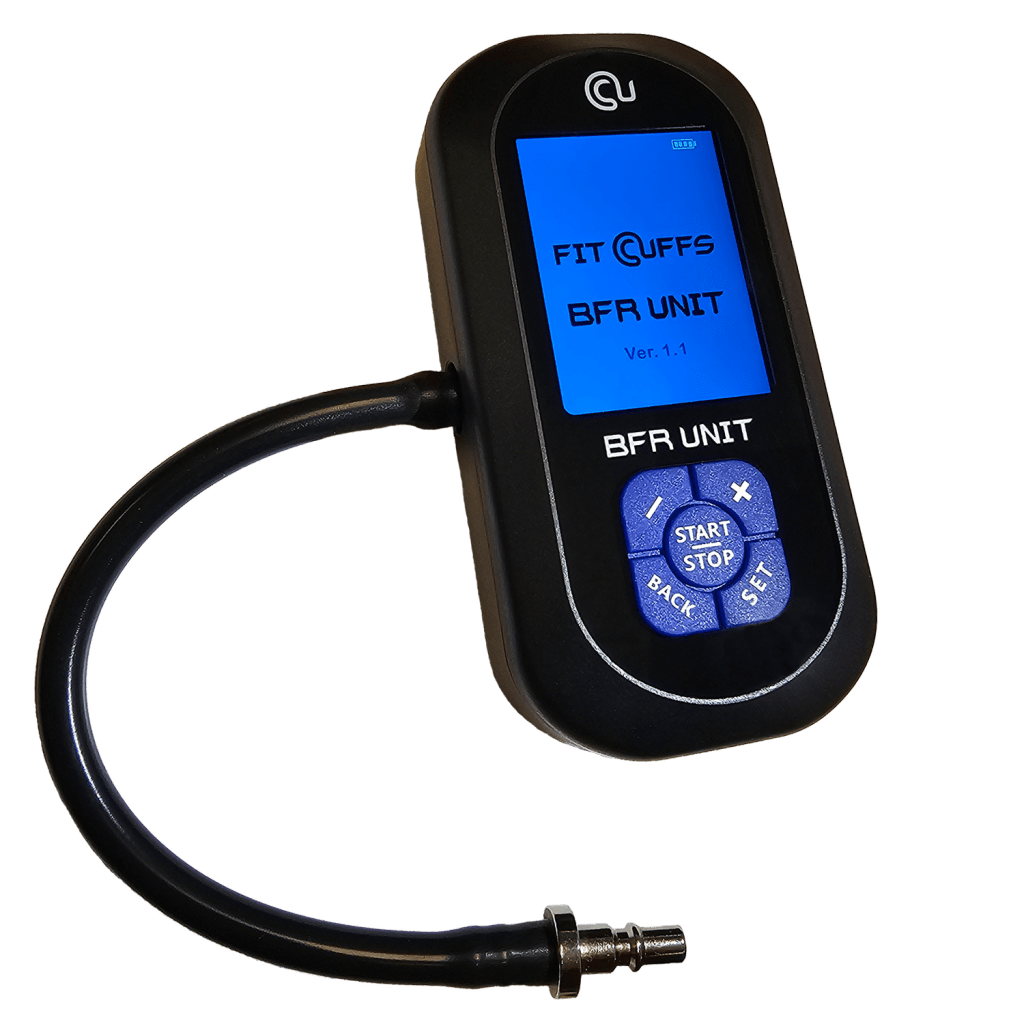


Is low➡️moderate load BFR Training superior for grip strength!?
This clinically relevant research question has been investigated by Zanardini et al. (2020).
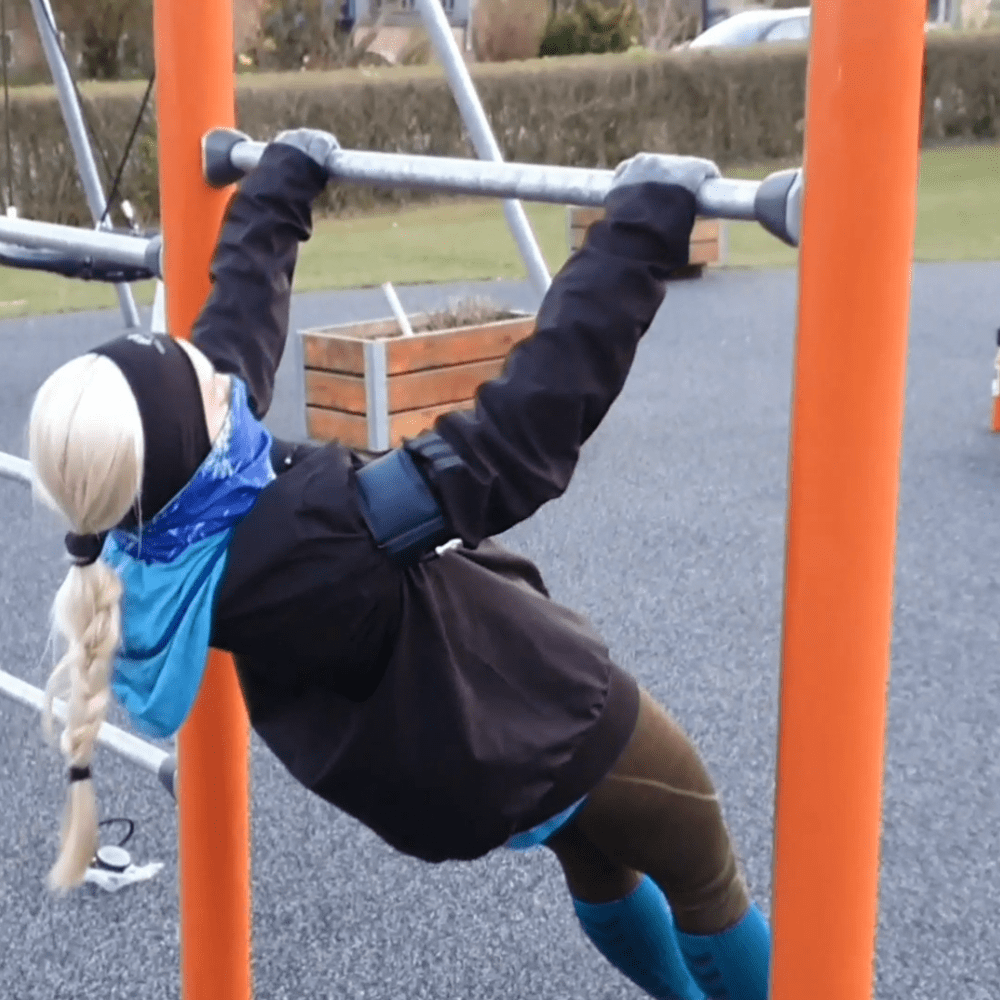
– FYI, considering the cold spring in Denmark, remember to dress accordingly..🥶
Background: High-load resistance training is recommended to improve muscle mass and strength, but BFR seems to provide similar adaptations.
Purpose – the effects of BFR Training for grip strength & hypertrophy.
Hypothesis: The effect of low-moderate load BFR Training in Maximum Hand Grip Strength (MHGS) and muscular size is similar to Conventional high-load training!?
Methods: 28 women, age 18-25, randomly assigned into two groups: BFR vs Conventional resistance training (No-BFR).
Outcomes – Muscle size measures & MHGS
Intervention – 3/weekly – 4xweeks as dynamic concentric contraction exercises on a dynamometer.
Intensity for the BFR group. MHGS at 30-35% 1RM in the 1. week, 40-45% 1RM in the 2. week and 50-55% 1RM in 3.-4. weeks.
Intensity for the No-BFR group. MHGS at 65-70% 1RM in the 1. week, 70-75% 1RM in the 2. week and 80-85% 1RM in 3.-4. weeks.
3 sets of 15-25 reps were performed until failure with 30 s. inter-set rest for the BFR group and 3 sets of 8-12 reps with 1 min. rest for No-BFR group.
Results – values presented as medians:
% Change in Right MHGS, BFR group vs No-BFR group: (5% vs 5.1%)
% Change in Left MHGS, BFR group vs No-BFR group: (8.7% vs 14.9%)
Arm Muscle Circumference, BFR group vs No-BFR group: (2% vs -0.1%)
Upper Arm Circumference, BFR group vs No-BFR group: (1.8% vs -0.3%)
Lower Arm Circumference, BFR group vs No-BFR group: (0.2% vs 1.5%)
Conclusion:
Despite the authors praising BFR training in their discussion, the results seems to be in line with comparable studies showing similar effects of Conventional high-load training vs low-load BFR Training.
Clinical Take – Thus, we recommend low-moderate load BFR for improving grip strength as an alternative or adjunct to high-load training. Hand therapists can utilize BFR training when the aim of the intervention is to increase muscle strength when high-load resistance training is contraindicated. E.g. this can be relevant for people who experience aggravation associated with conventional resistance training particularly for people suffering from hand osteo arthritis or hand rheumatoid arthritis.
Source:
Zanardini et al (2020) Effects of blood flow restriction training on handgrip strength and muscular volume of young women.
Additional source for BFR and grip strength: Credeur et al. (2010) Effects of handgrip training with venous restriction on brachial artery vasodilation.
Velic & Hornswill (2014) KAATSU Training and Handgrip Strength.