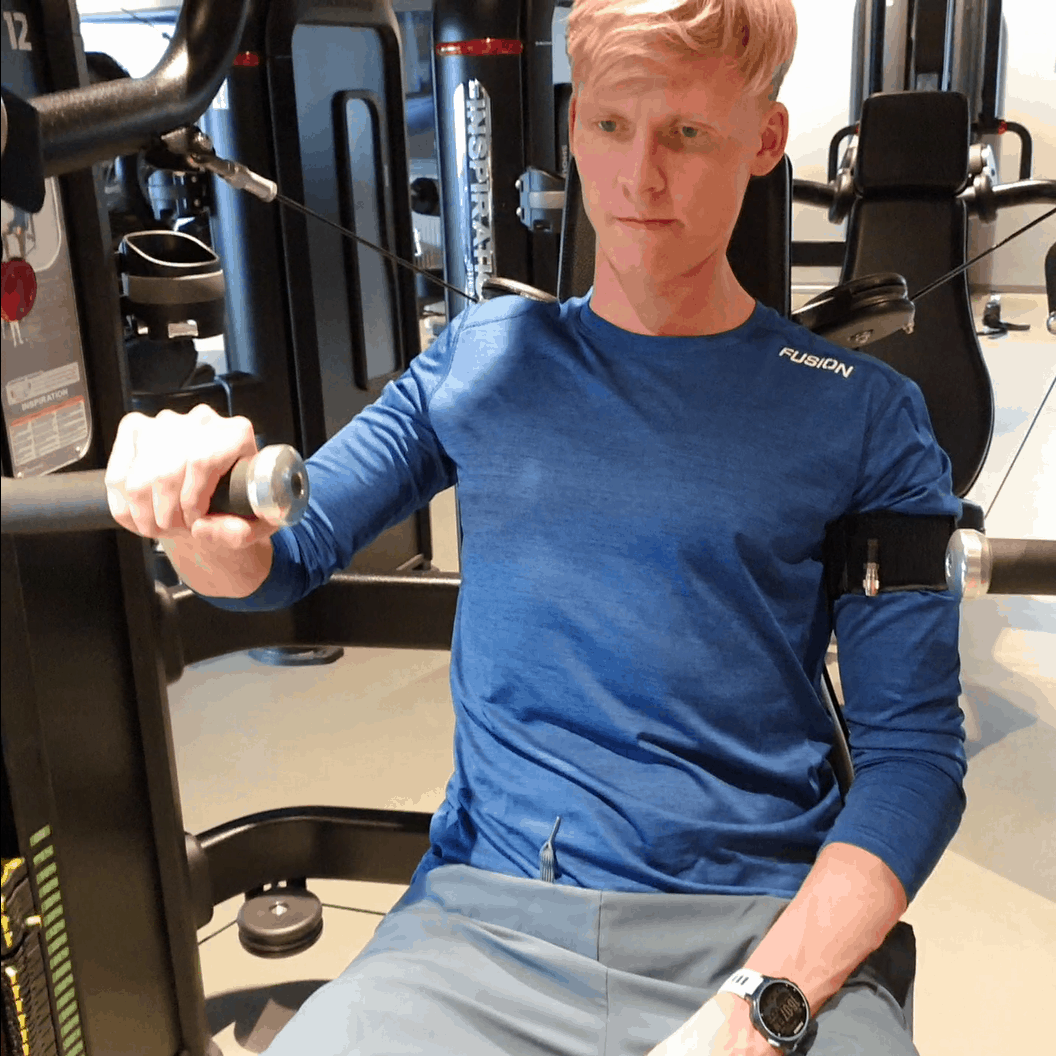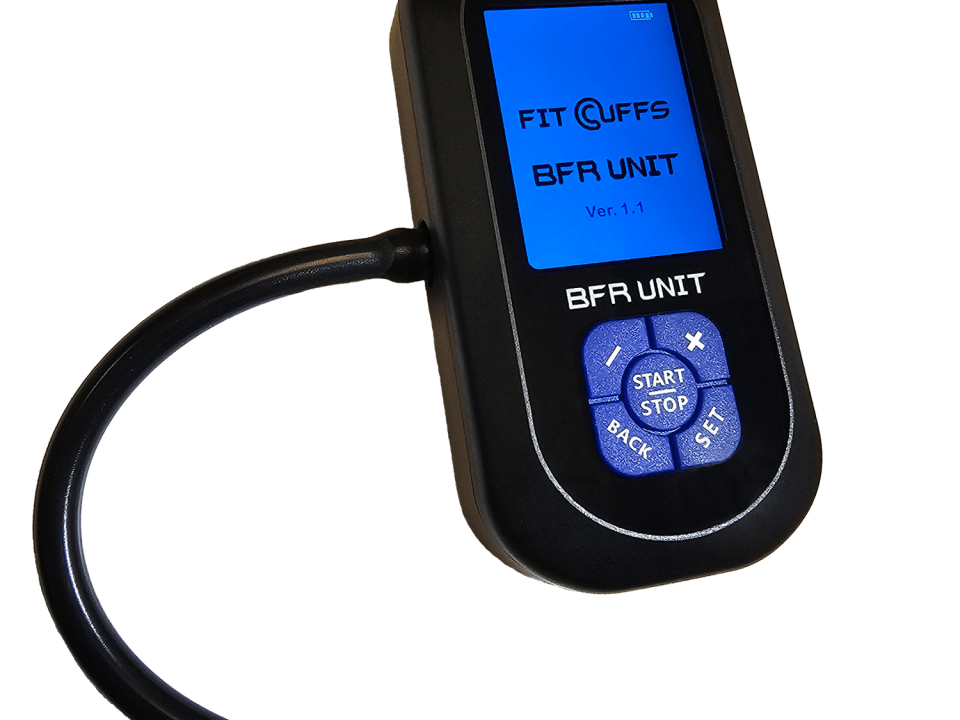


In this video and text we propose how to regain strength by Blood Flow Restriction (BFR) / Occlusion Training and conventional resistance training in the early and mid-phase after a conservative managed elbow fracture.
It usually takes approximately 6 weeks for the fracture to heal, during this time, it is imperative that the elbow is not stressed by heavy lifting. On the other hand, it is equally as important to start to exercising as soon as possible, in order to regain normal ROM.
In this case, after the initial examination for potential displacements, dislocations, injury to blood vessels and nerves no surgical intervention was needed and only partial immobilization was prescript by the physician:
By early contralateral resistance training for the uninjured arm, you can attenuate the loss of muscle mass and strength by cortical, subcortical and spinal level transfer. Using machines with adjustable weights are probably most convenient, with the injured limb using Low-load BFR and the opposite arm performing the same exercise with higher load and fewer reps in the resting periods (30-45 s.). By combining both training modalities, we’re achieving the potential benefit from both a central neurological and a peripheral muscle perspective.
The obvious benefit of using BFR is retaining strength and muscle mass with low loads, protecting the fracture. But additionally, it is imperative for fracture that the bone reabsorption (osteoblastic activity – breaking down bone) does not exceed bone formation (osteoclastic activity). Some BFR training studies showing that the cell swelling increases load around the fracture site, creating a measurable increase in bone formation markers and a decrease in bone reabsorption markers.
Though, this potential specific effect of BFR on bone formation is still very preliminary. It is important to gradually increase activity and load as the pain and swelling subside so the bones can achieve their preinjury strength. As a rule of thumb, do the exercises with high frequency, but low volume even though the elbow is often stiff and painful, it is important to continue progressing for a successful rehab.
Source:
Cancio et al. (2019) Blood Flow Restriction Therapy after Closed Treatment of Distal Radius Fractures.
Carroll et al. (2006) Contralateral effects of unilateral strength training: evidence and possible mechanisms.
Bittar et al. (2018) Effects of blood flow restriction exercises on bone metabolism: a systematic review.