

2. Post on BFR Training to improve sports & athletic performance – 2/3
In this follow up post on the continues series on BFR for performance, we present the findings from the 2. part of the review by Pignanelli et al. (2021).
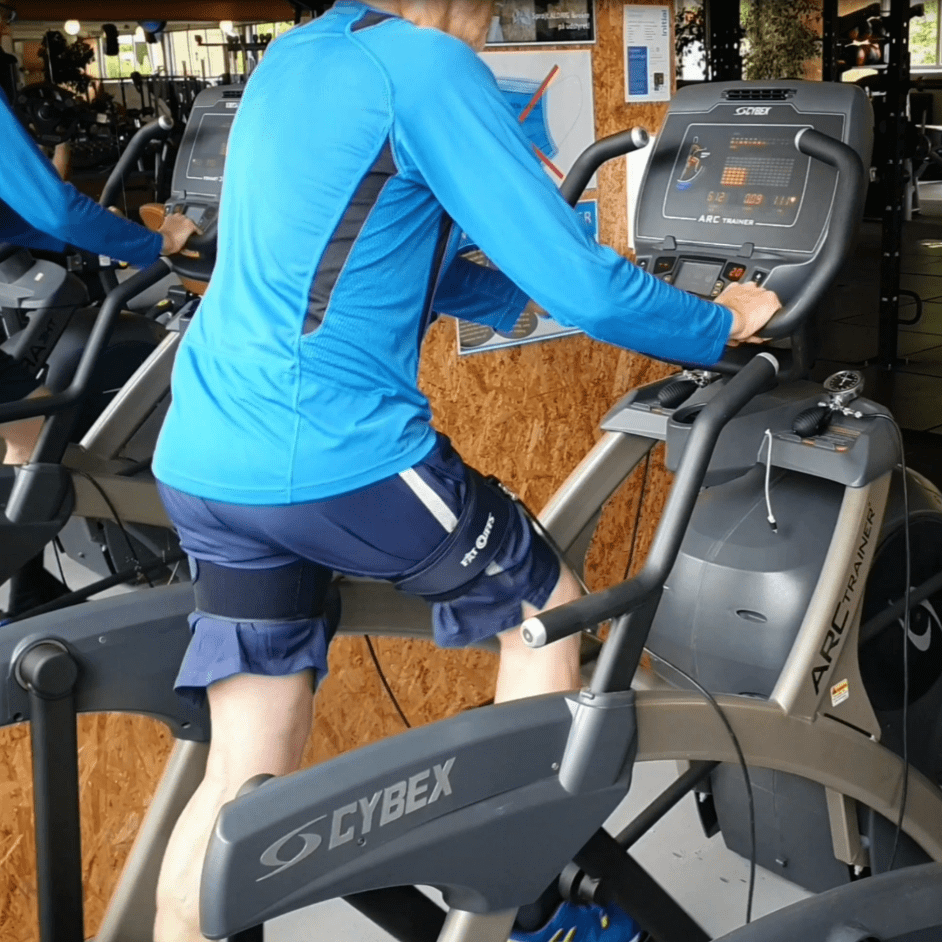
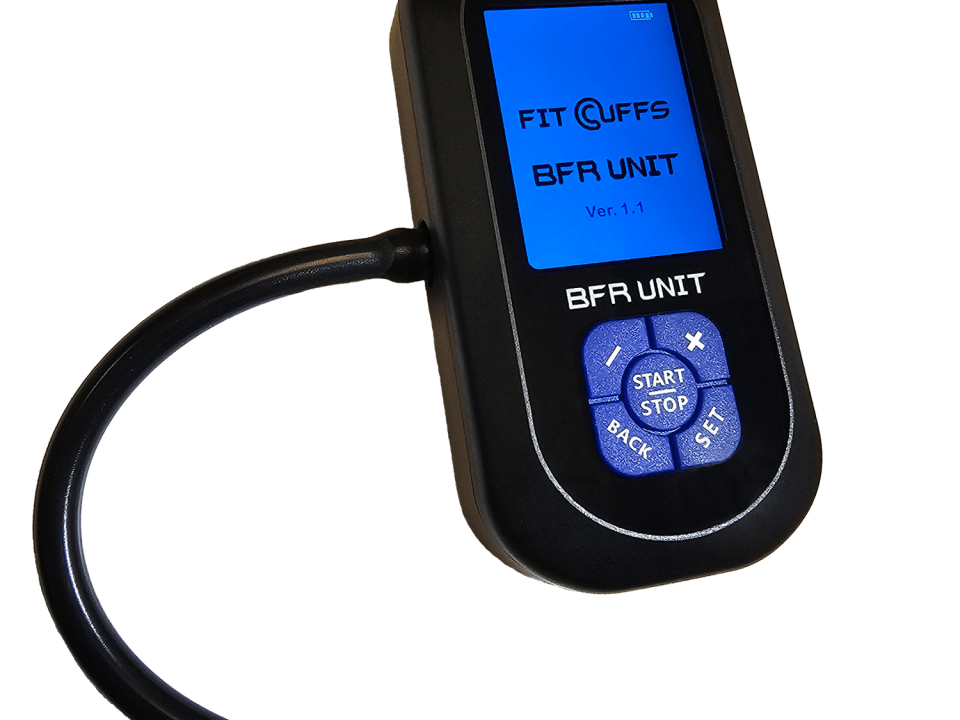
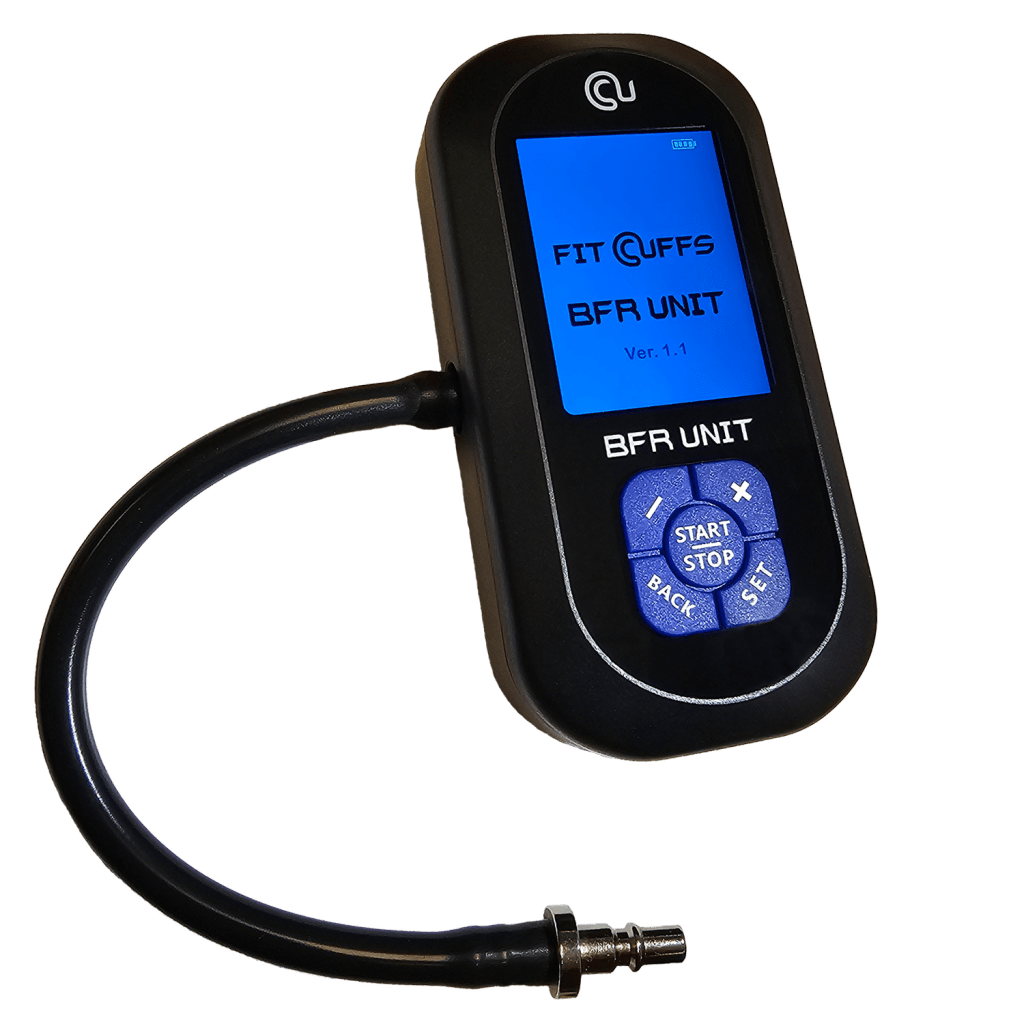
In display, You will find the updated pressure gauge (Wireless). By pairing this edition with the brand new optional longer hose (2.2 meters / 87 Inch) You got a game changer for interval-based BFR exercise. Because it allows for instant pressure readings and importantly swift inflation and deflation relative to inter-set rest and work periods – BFR cardio exercise has never been more convenient.
📍2. Physiological adaptations following BFR Training.
👉 Muscle Redox and Ionic Buffering:
Muscle fatigue is multifactorial and task-dependent encountered from a range of physical parameters. Optimizing the capacity to maintain redox and ionic homeostasis during exercise is important for athletic performance.
BFR augmented interval running in well trained individuals (>57 VO2-max) increases markers associated with ion transport (Christiansen 2018).
Similar BFR protocols has been used for 6 week of bike-interval training in recreational individuals, which increased the work capacity of the knee extensors 23% vs workmatched control 11%. (Christiansen 2019A, 2019B).
Comparable adaptations seem to improve repeated sprint and general running performance.
👉 Muscle Oxidative Capacity:
High oxidative capacity is imperative for oxygen extraction, to maintain aerobic work and to perform and recover from repeated high-intensity efforts.
Improvements in muscle oxidative capacity has been linked to both mitochondria content and importantly function.
4 week of moderate-intensity bike training (45 min/session) with BFR increased citrate synthase activity +20% compared with the work-matched control (Esbjörnsson 1993).
Favorable effects of BFR-interval training on muscle oxidative capacity have also been explored as 4–6 week of bike-interval training, which improved muscle diffusional O2 conductance (Christiansen 2020) and oxygen kinetics (Corvino 2019).
More to come in this series on the cardiovascular adaptations and future research/perspectives for BFR Training.
Primary Source:
Pignanelli et al (2021) Blood flow restriction training and the high-performance athlete: science to application.
Original papers:
Christiansen et al (2018) Running is related to fibre type-specific AMPK signalling and oxidative stress in human muscle.
Christiansen et al (2019A) Blood flow-restricted training enhances thigh glucose uptake during exercise and muscle antioxidant function in humans.
Christiansen et al (2019B) Cycling with blood flow restriction improves performance and muscle Kþ regulation and alters the effect of anti-oxidant infusion in humans.
Esbjörnsson et al. (1993) Muscle fibre types and enzyme activities after training with local leg ischaemia in man.
Christiansen et al (2020) Training with blood flow restriction increases femoral artery diameter and thigh oxygen delivery during knee-extensor exercise in recreationally trained men.
Corvino et al (2019) Speeding of oxygen uptake kinetics is not different following low-intensity blood-flow-restricted and high-intensity interval training.