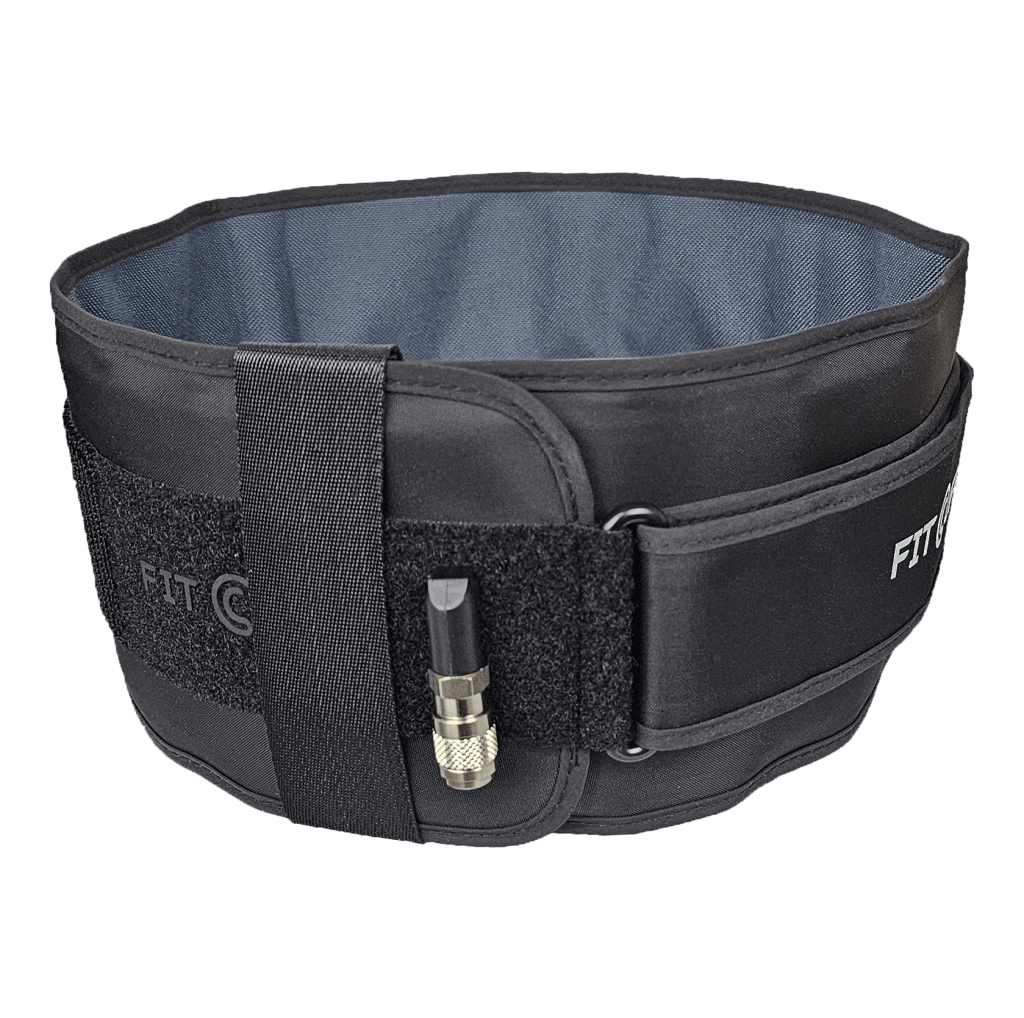


This post is about the effect of BFR Resistance Training (BFR-RT) on strength and muscle mass in comparison to Conventional Resistance Training (C-RT) or High Load Resistance Training (HL-RT).
Because of the inherent difficulties of a fair comparison, results are varying of wherever BFR-RT is more or less effective. Though, at least 4 meta-analysis has explored the potential effect of BFR-RT vs (C-RT) / (HL-RT).
But even though this has been explored in several metal-analysis, methodological difficulties make the question hard to answer without further clarification.
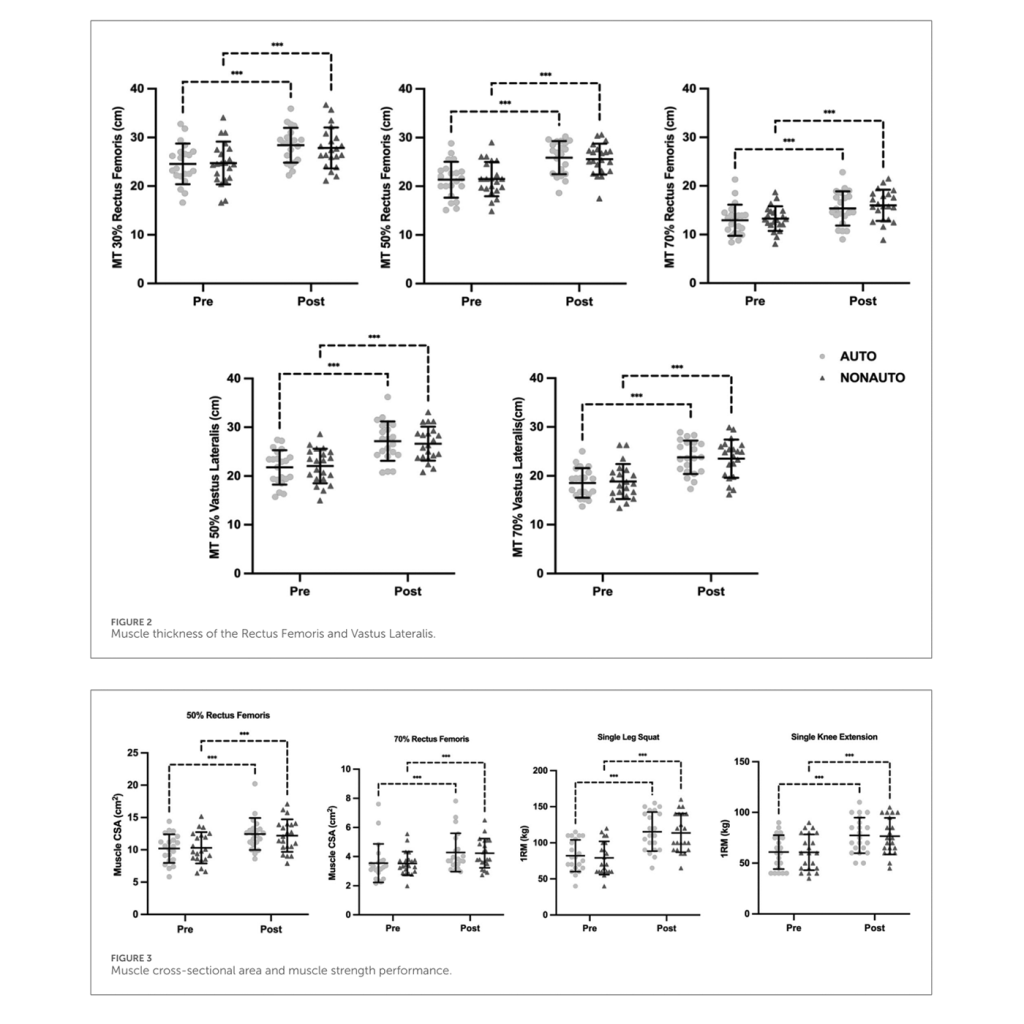
If we take a look at short term follow-up it seems that BFR-RT can be more effective, but probably only in regards to hypertrophy. For longer follow-up periods (>10 weeks) it seems that C-RT is more effective on most parameters.
But the largest issue for measuring the effect of BFR-RT, is the different group designs, i.e. type of exercise intervention. Therefore, we have tried to pin-point some relevant comparisons and the results extracted from various meta-analysis:
BFR-RT vs C-RT (repetition matched):
Strength, significant in favor of BFR-RT. Hypertrophy, significant in favor of BFR-RT.
Though much higher Ratings of Perceived Exertion for BFR-RT.
BFR-RT vs C-RT (voluntary/repetition failure):
Similar effects, thus in favor of BFR-RT.
Similar Ratings of Perceived Exertion. But anywhere from 30-50% more repetition needed without BFR.
BFR-RT vs HL-RT (relative RM matched or voluntary failure):
Strength, in favor of HL-RT. Hypertrophy, similar effect. Though, longer exercise duration for HL-RT.
Similar Ratings of Perceived Exertion.
Summarized:
Short-term muscle mass: Probably BFR-RT.
Long-term muscle mass: Approximately same.
Short-term muscle strength: Approximately same.
Long-term muscle strength: HL-RT.
Side note: Muscle endurance and anaerobic performance: BFR-RT.
Maximum power development and training to improve running velocity: HL-RT.
But these comparisons have only limited practical importance as BFR-RT is primarily targeted the impaired e.g. injured or just as an adjunct to HL-RT for the majority of athletes and average Joe´s.
Source:
Slysz et al. (2016) The efficacy of blood flow restricted exercise: A systematic review & meta-analysis.
Hughes et al. (2017) Blood flow restriction training in clinical musculoskeletal rehabilitation: a systematic review and meta-analysis.
Centner et al. (2018) Effects of Blood Flow Restriction Training on Muscular Strength and Hypertrophy in Older Individuals: A Systematic Review and Meta‑Analysis.
Lixandrao et al. (2018) Magnitude of Muscle Strength and Mass Adaptations Between High-Load Resistance Training Versus Low-Load Resistance Training Associated with Blood-Flow Restriction: Systematic Review and Meta-Analysis.