


This is the 3. and finale Post on BFR Training for performance – 3/3
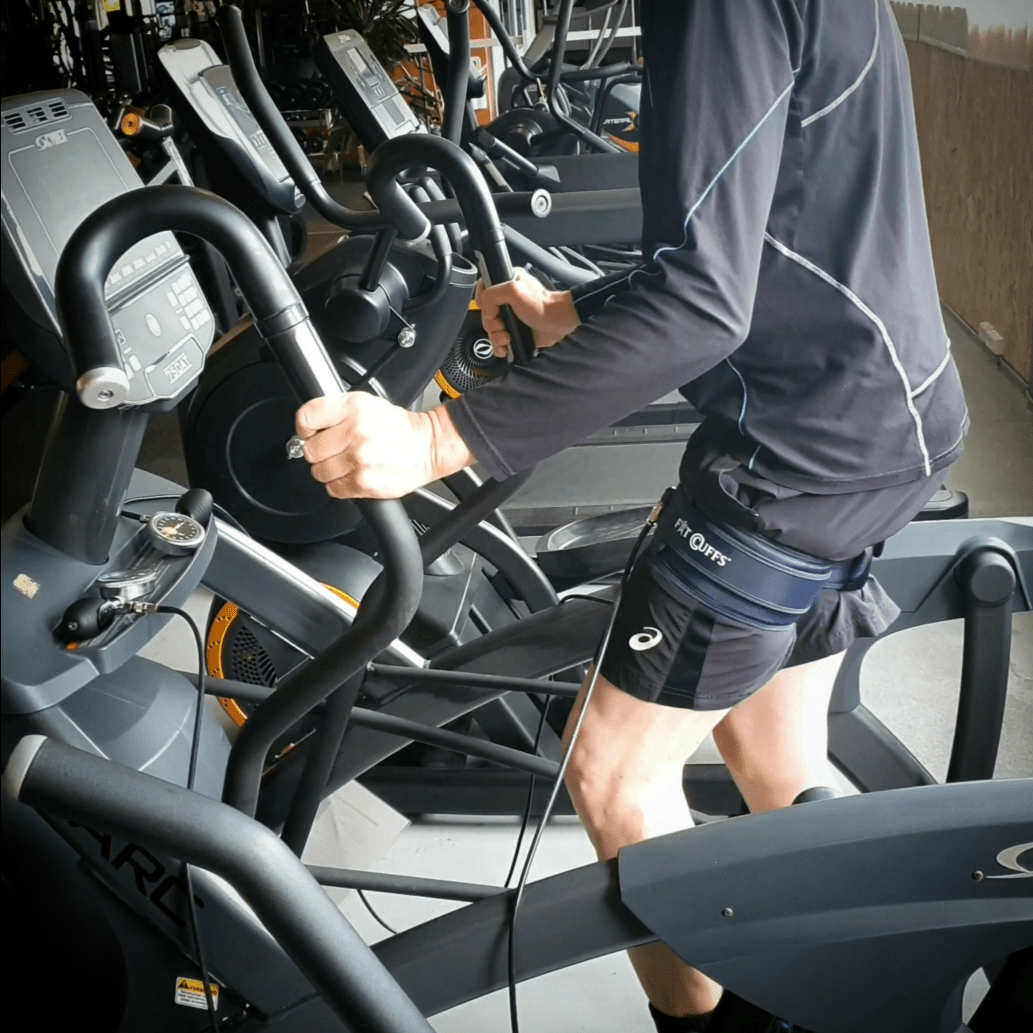
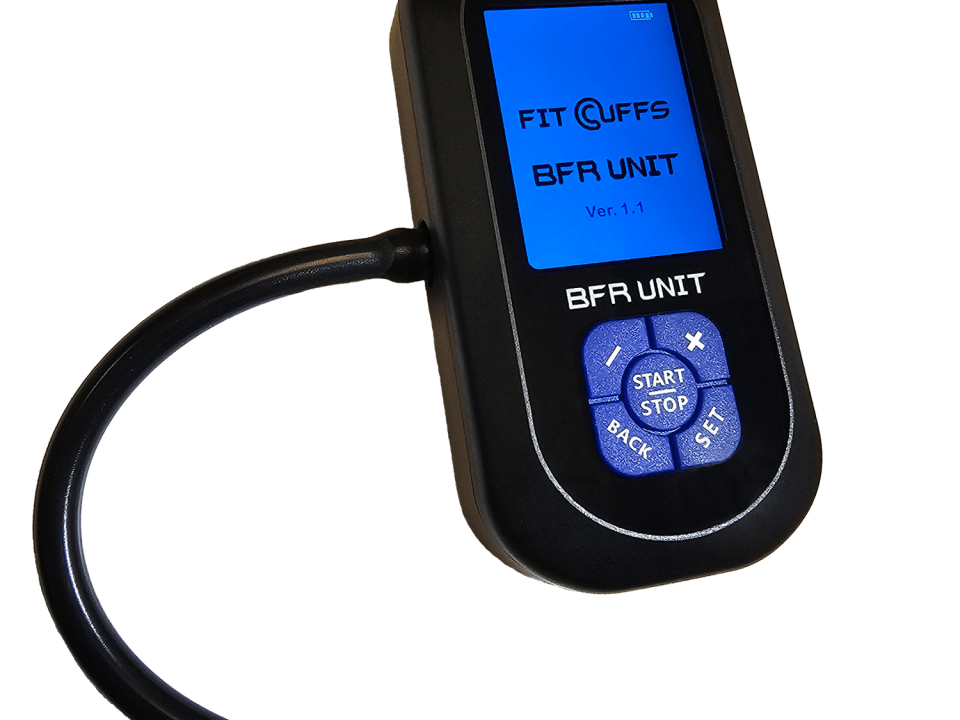
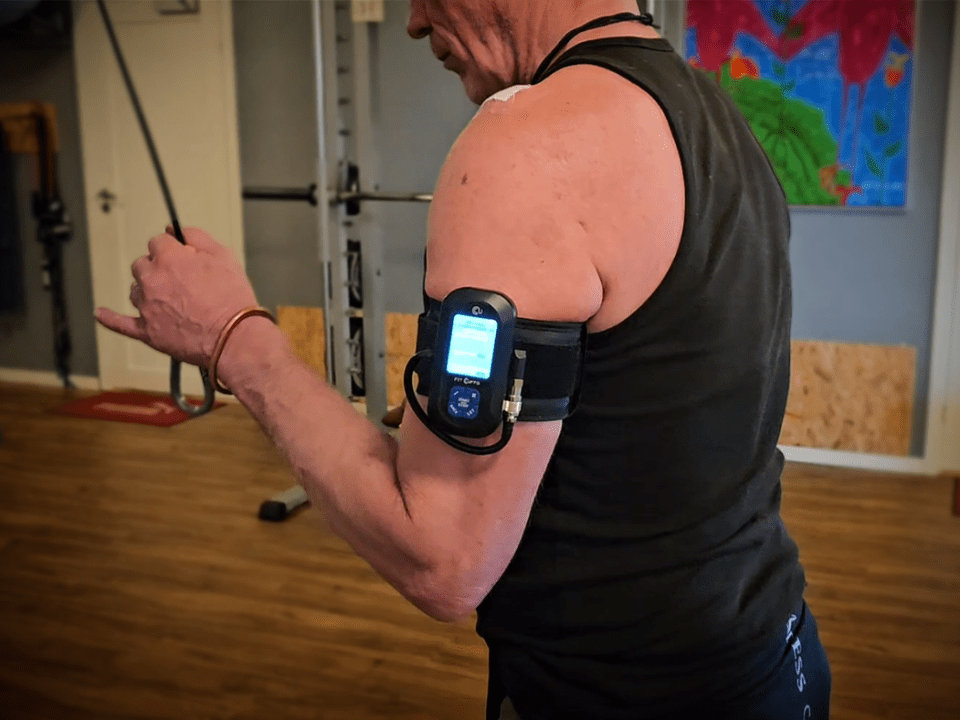
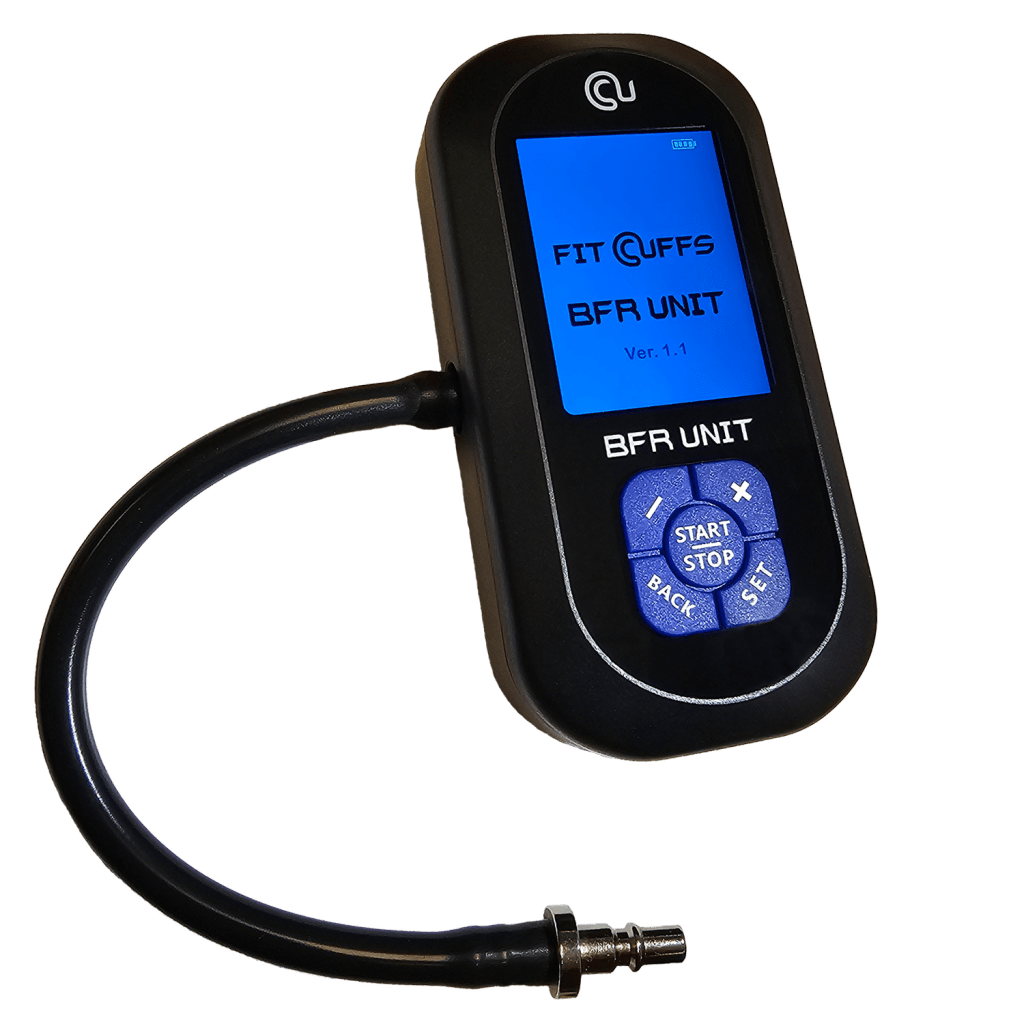
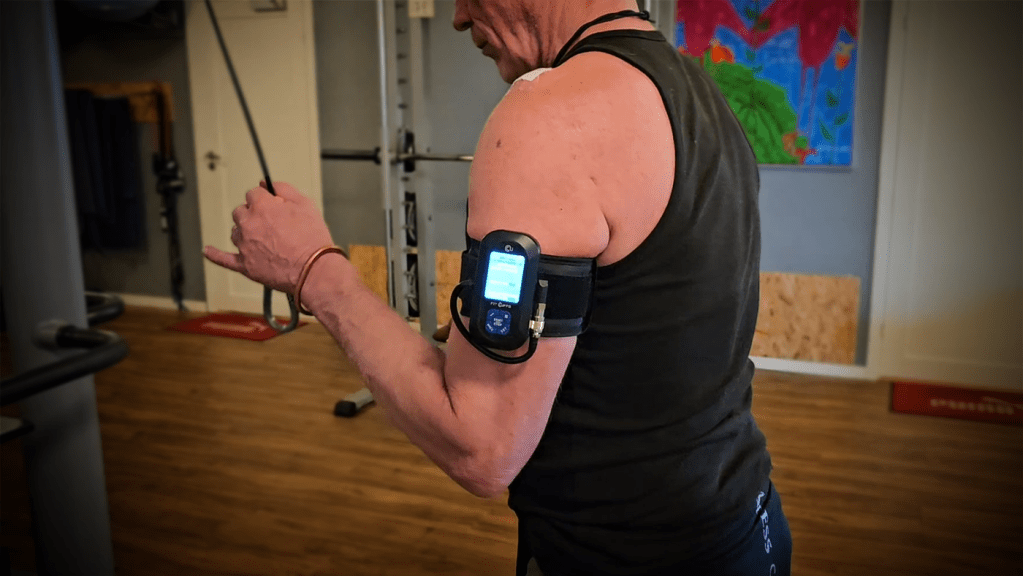
In display You will find the optional constant connected Pressure Gauge for convenient interval-based exercise. Combined with the recent optional longer hose and quick air-release, You have the possibility to swiftly detach and re-attach the Gauge if needed.
In the text below You will find the finale post in the continues series on BFR for performance, as we present the finale findings from the review by Pignanelli et al. (2021).
📍Cardiovascular Adaptations and Fitness:
The cardiovasculature ability to transport O2 from the heart to the microvasculature (VO2max), is determined by Maximal Cardiac output (Q-Max) and Arterial Venous Oxygen transport (A-V O2 difference).
Peripheral adaptations, e.g., increase in artery blood flow, muscle capillary density, and elevated oxidative capacity is probably the most important physical adaptation for increased VO2max following periods of BFR training.
Compared with regular exercise, BFR Training provides a unique blood flow: During BFR, muscle oxygen supply is reduced, which stimulates the release of local vasodilatory substances from the vasculature and muscles. As a result, upon cuff release, a large increase in blood flow elevates vascular shear stress which offer an advantageous stimuli compared to free flow exercise.
Like this example, the response to 6 weeks of BFR bike-interval training, knee-extensor oxygen delivery at a high intensity (90% of incremental peak output) increased by 13% vs free-flow condition ~ 0% (Christiansen 2020).
Different VO2max limitations in endurance-trained vs untrained individuals are interesting because improvements have been observed regardless of exercise mode or intensity in both untrained (Abe 2010), (Conceição 2019), (Oliveira 2016) and well-trained (Held 2019), (Mitchell 2019), (Taylor 2016).
In support of central cardiovascular improvements, it seems that muscle capillarity or mitochondrial protein content in endurance-trained athletes is not massively improved following sprint-interval BFR Training, despite robust increases in VO2max (Mitchell 2019).
Conclusion and Perspectives:
It remains to be determined how the interaction of BFR and exercise training variables (pressure, intensity, duration, and frequency) influence each distinct adaptation!? Though, for improved muscle oxidative capacity BFR training should be achieved from endurance- and obviously not resistance-type BFR training.
Adaptations to BFR cardio exercise may occur via different mechanisms as interval-type BFR training improves mitochondrial function, whereas continuous, steady-state BFR training may increase mitochondrial content!?
To date, no studies have explored changes in cardiac structure and function following BFR training!?
It is currently unknown how training status influences the response to BFR exercise. Nevertheless, BFR exercise seems to be a relevant add-on for optimizing various parameters of performance regardless of training status.🔥
Primary Source:
Pignalelli et al. (2021) Blood flow restriction training and the high-performance athlete: science to application
Original Papers:
Abe et al. (2010) Effects of low-intensity cycle training with restricted leg blood flow on thigh muscle volume and VO2max in young men.
Conceição et al. (2019) Augmented anabolic responses after 8-wk cycling with blood flow restriction.
Oliveira et al. (2016) Short-term low-intensity blood flow restricted interval training improves both aerobic fitness and muscle strength.
Held et al. (2019) Low intensity rowing with blood flow restriction over 5-weeks increases V-VO2max in elite rowers: a randomized controlled trial.