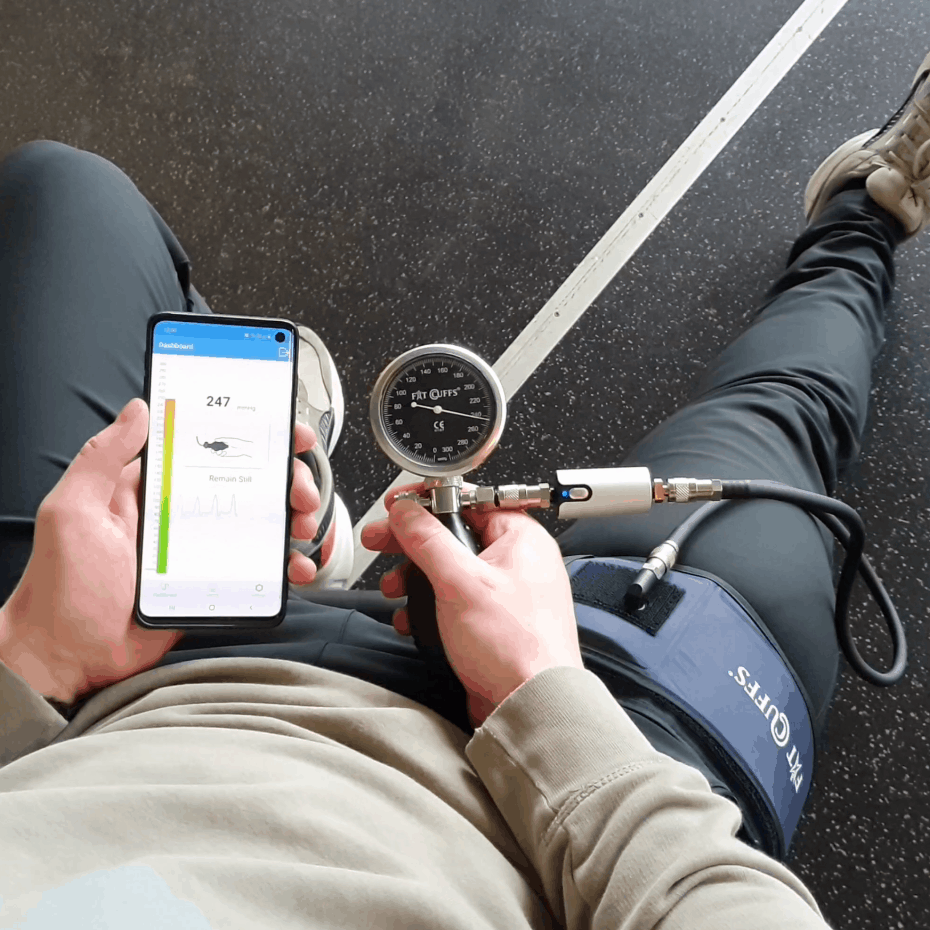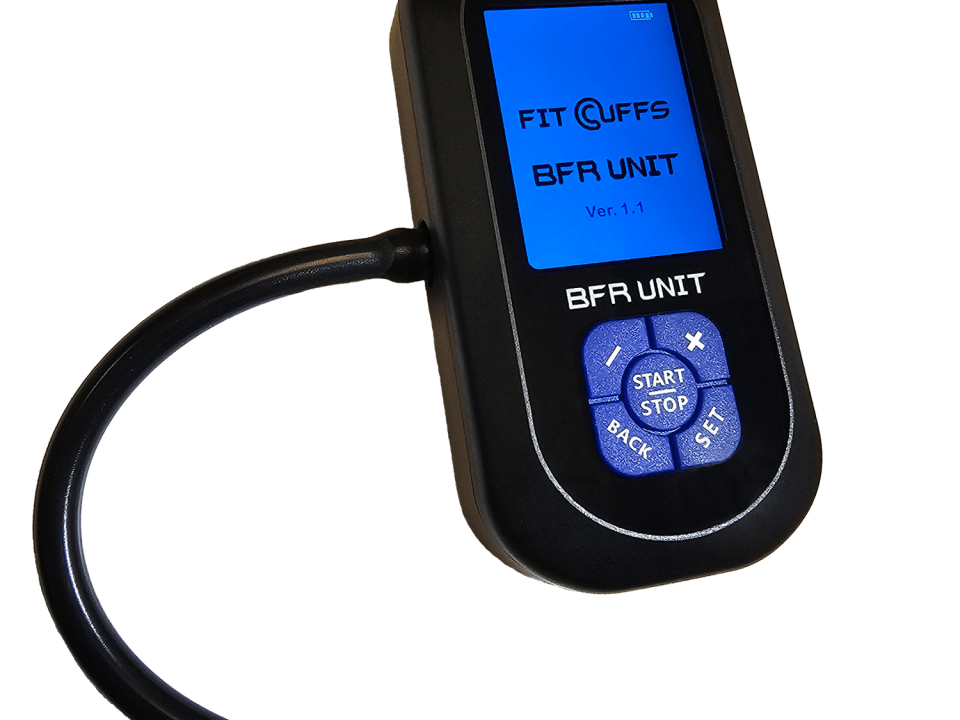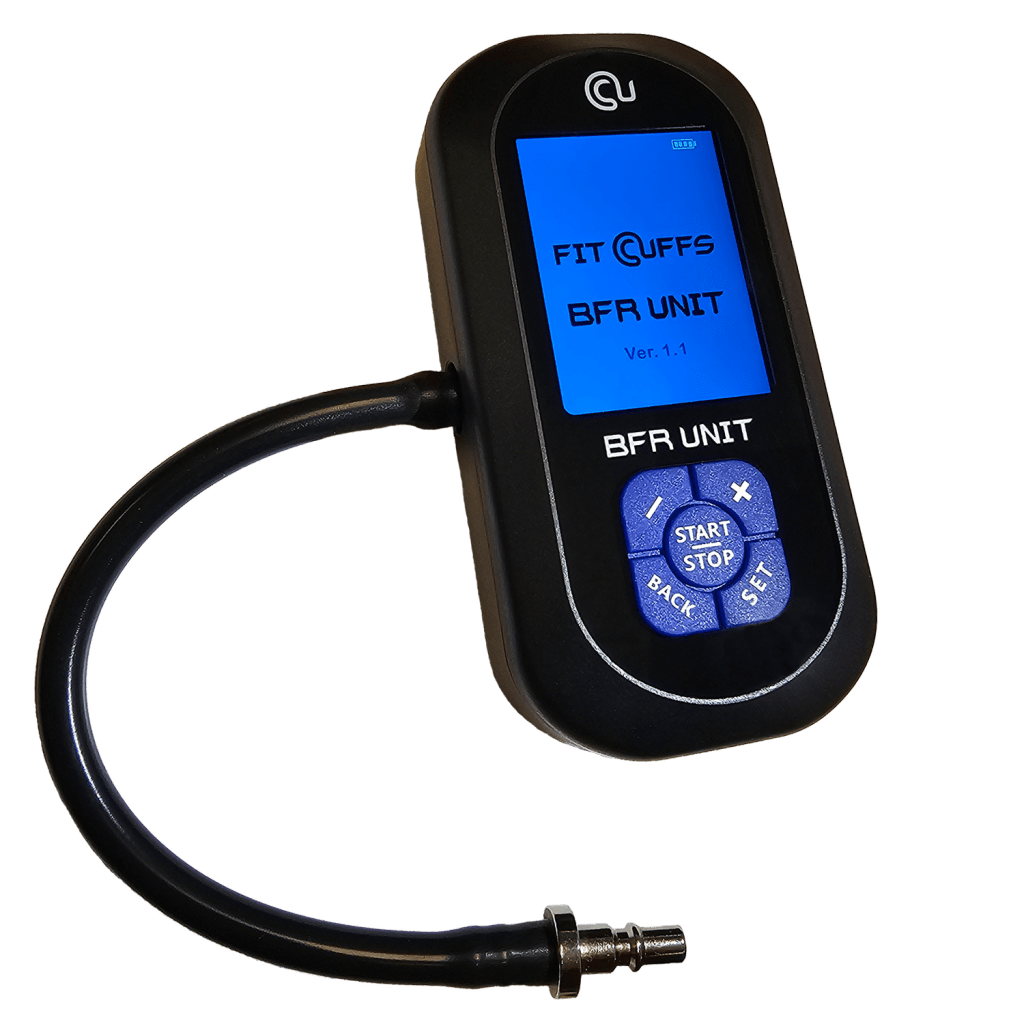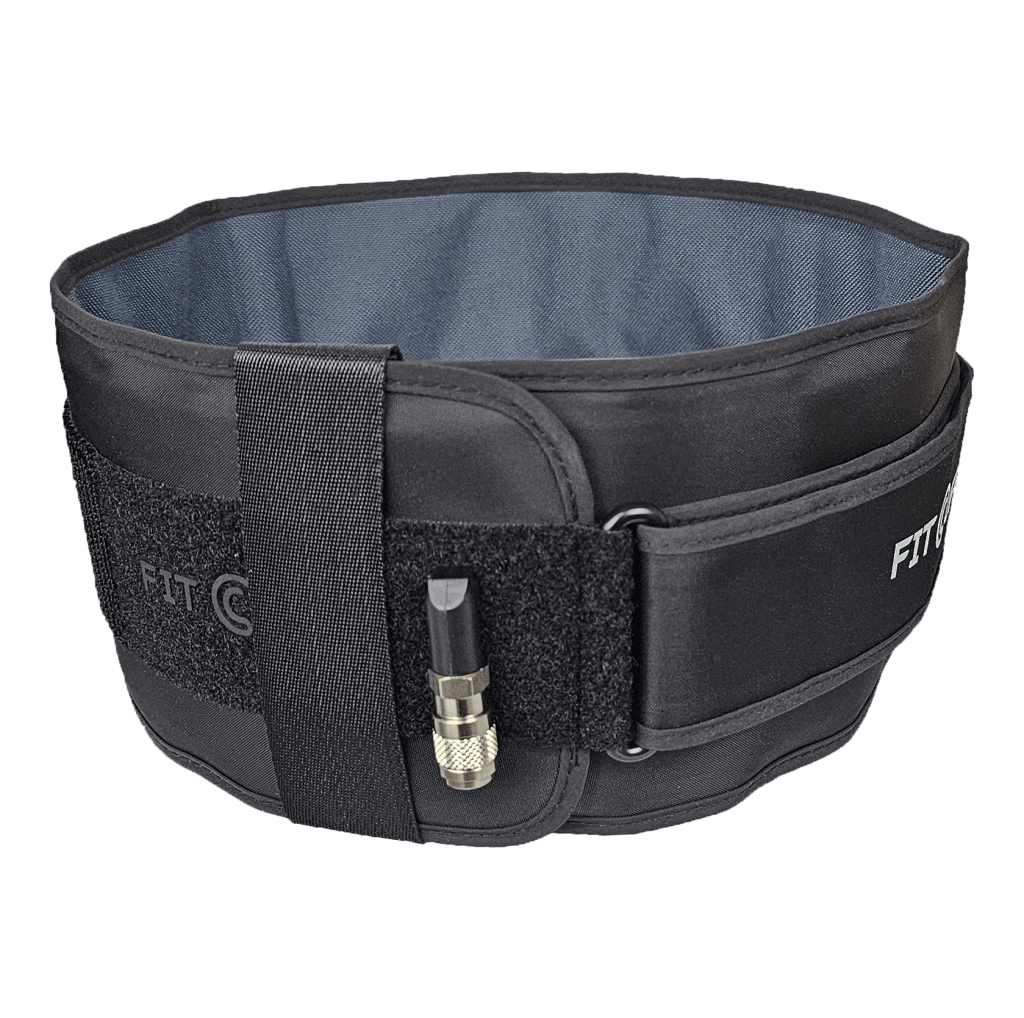


This is a follow-up video on how to measure Limb Occlusion Pressure (LOP) by our Bluetooth Device, with the present post being applicable for lower body assessments.
This time around we have a guide for measurement of lower body LOP, as this can be a bit more tricky compared to upper body assessments.
So, if you’re having problems with lower body LOP assessments, please see the following troubleshooting guide:
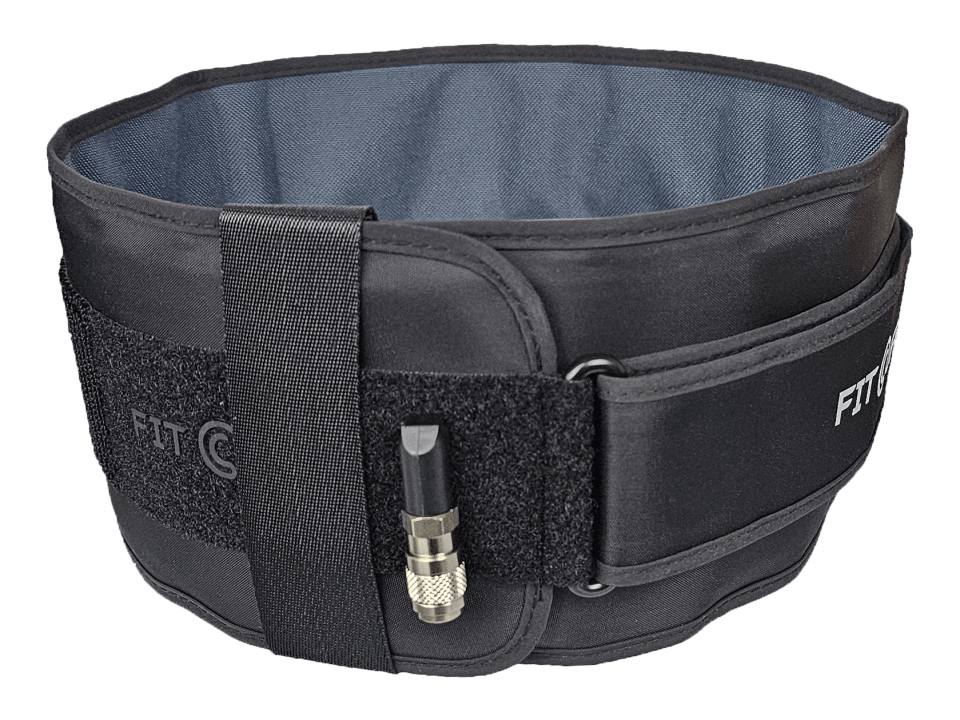
✔Make sure that the cuff is completely deflated before attachment on the most proximal part of the thigh.
✔Also mind that you got a tight fit before inflation (pumping up) and please remember to not sit directly on the cuff.
✔Position yourself or your client as displayed above resting the foot on the floor with a slight bend in the knee.
✔Connect the Bluetooth Device directly into the cuff or to the new “Wireless” edition of the pressure gauge as displayed.
If you receive an error message on the app display, then you should manually control the deflation speed as shown in this video:
✔Keep inflating to about 280 mmHg, before you let the Bluetooth Device deflate the Cuff.
✔Turn the screw-cock on the Fit Manometer (pressure gauge) to slightly speed up deflation as shown.
✔The green graph very peaks is only allowed outside the white window for a successful measurement.
✔If this seems troublesome, try to deflate the cuff with the push-button, thus keeping a slightly accelerated deflation speed through the cock-screw and try again..
✔Please mind that even the slightest movement interferes with the measurement and can make it impossible to measure LOP.
✔Please be patient as it can take some time to get it just right – practice makes perfect!
LOP will drop slightly if you do consecutive measurements and there may be a variance of 5-15% of SYS/LOP relative to body positioning, e.g. seated vs. lying.
230 mmHg SYS(LOP) is the maximum measurable pressure, so if you have excessively large thighs it might not be possible to measure.
We recommend the prescription of relative pressure i.e. 40-80% of LOP measured by the Bluetooth Device, Handheld dopplers or the “Calculate Pressure” module at training.fitcuffs.com.
Relevant Source:
El-Zein (2020) (Thesis) the use of a portable Bluetooth Device to measure blood flow restriction training pressure requirements: a validation study.
Berger et al. (2001) How Does It Work? – Oscillatory blood pressure monitoring devices.
Babbs (2012) Oscillometric measurement of systolic and diastolic blood pressures validated in a physiologic mathematical model.
Jordanow et al. (2018) Comparison of oscillometric, Doppler and invasive blood pressure measurement in anesthetized goat.