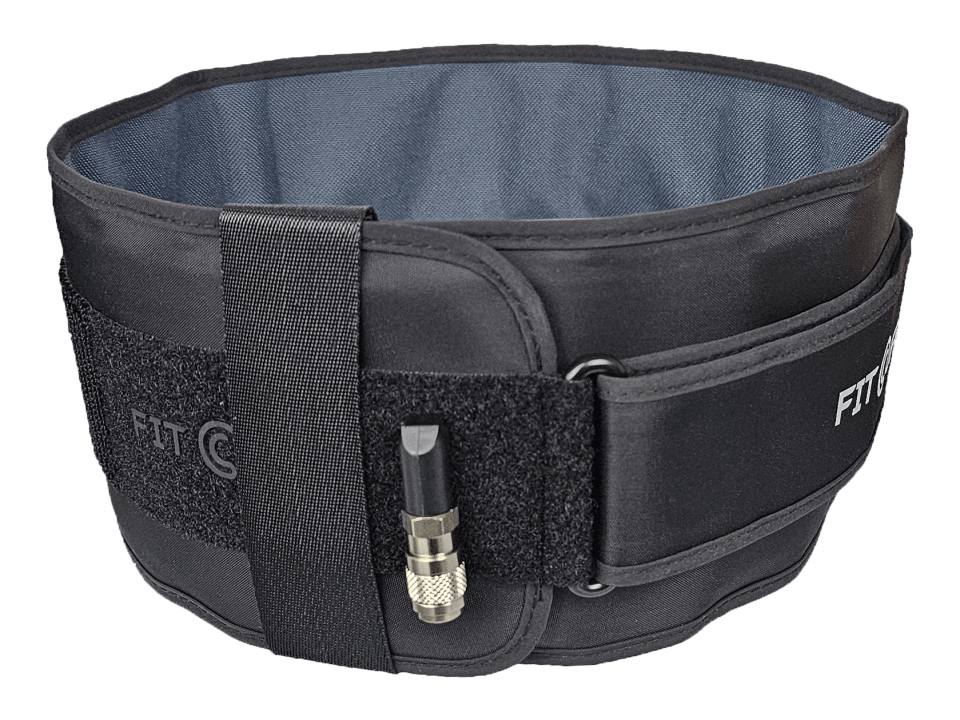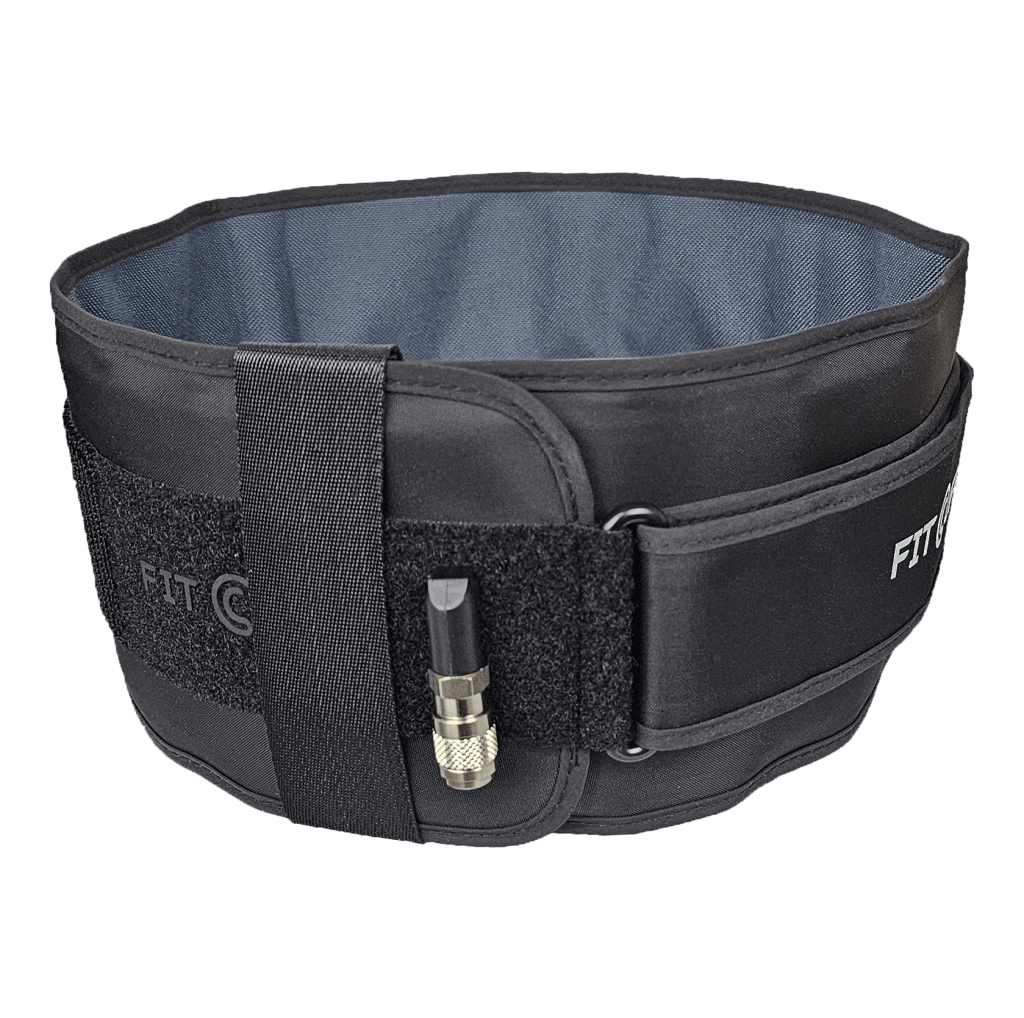
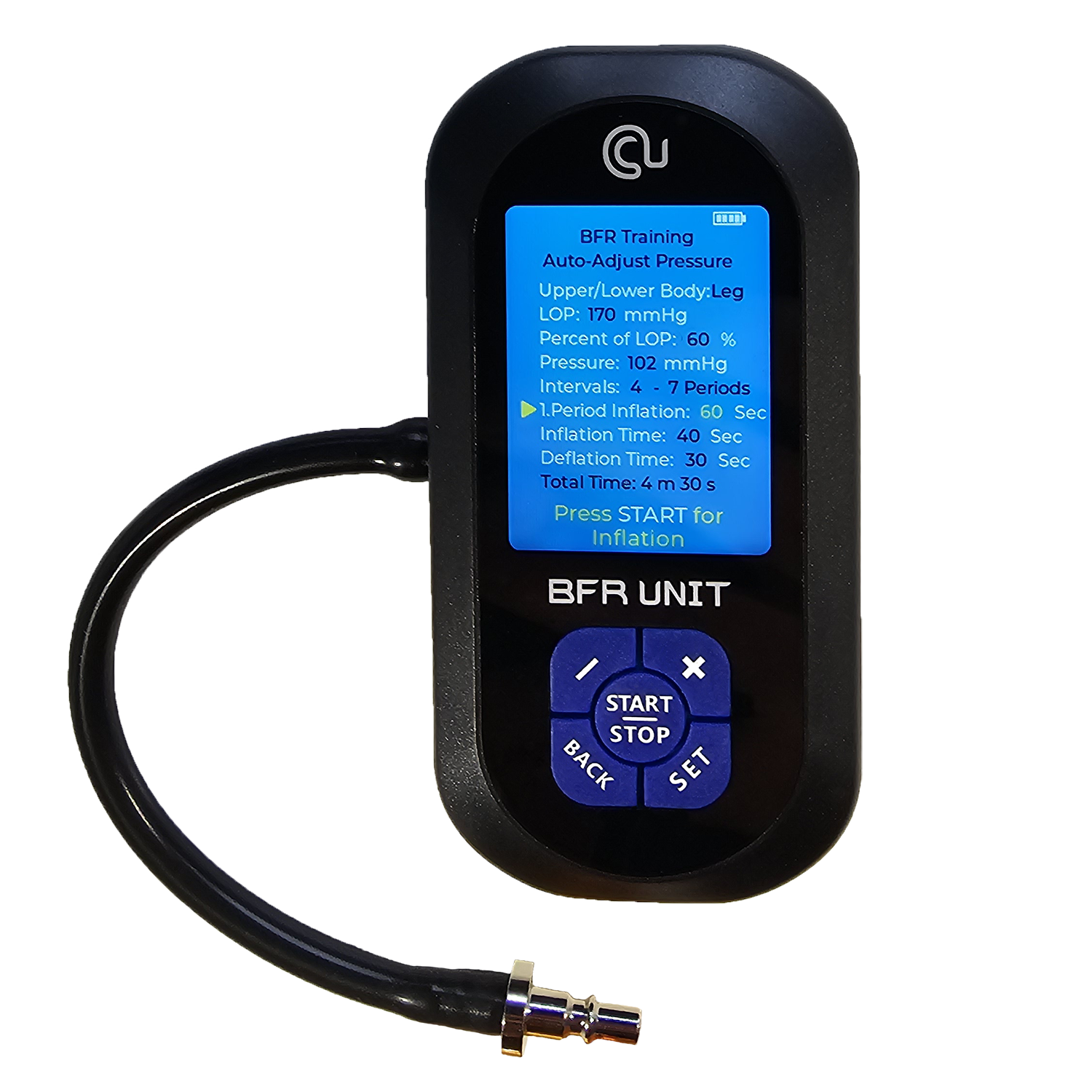
Image showcasing the left version of the contoured Leg Cuff V5.0, featuring a sleek ergonomic design for optimal support and comfort. The cuff is constructed with durable, high-quality materials and adjustable straps for a customizable fit, ideal for medical, athletic, or rehabilitation use
Introducing The Contoured Leg Cuffs V5.0
December 3, 2024
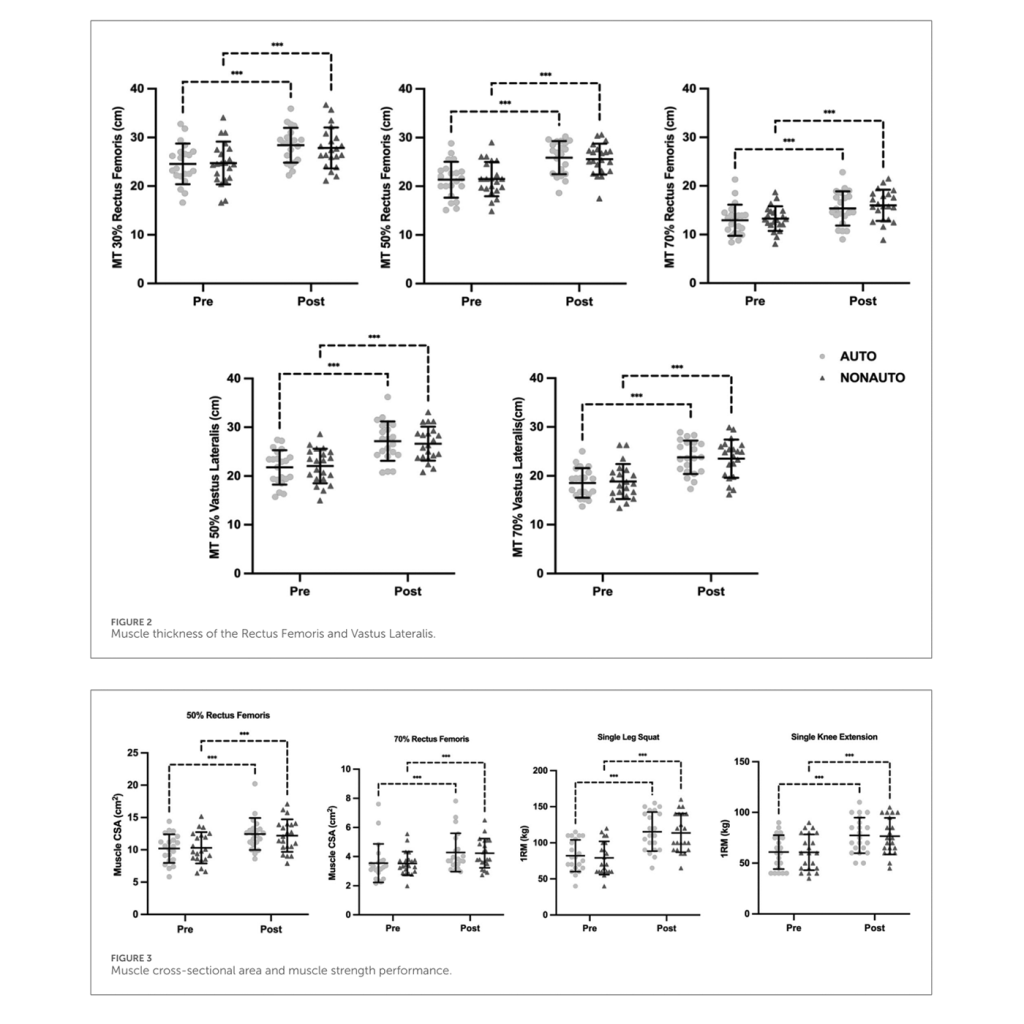
Figures 2 and 3 display grouped scatter plots comparing autoregulated (AUTO, gray circles) and non-autoregulated (NONAUTO, red triangles) blood flow restriction training before (Pre) and after (Post) an 8-week intervention. Figure 2 shows significant increases in rectus femoris and vastus lateralis muscle thickness at 30%, 50%, and 70% femur length in both conditions, with no differences between groups. Figure 3 shows significant increases in rectus femoris cross-sectional area (50% and 70%) and 1RM strength for single-leg squat and knee extension in both conditions, again with no between-group differences. Asterisks (***) indicate statistically significant pre-to-post improvements.
Automatic Pressure adjustments during Blood Flow Restricted (BFR) Exercise – A randomized within-subject 8-week trial
February 24, 2026

Introducing The Updated BFR Unit V1.1 For Blood Flow Restriction Training

December 12, 2025

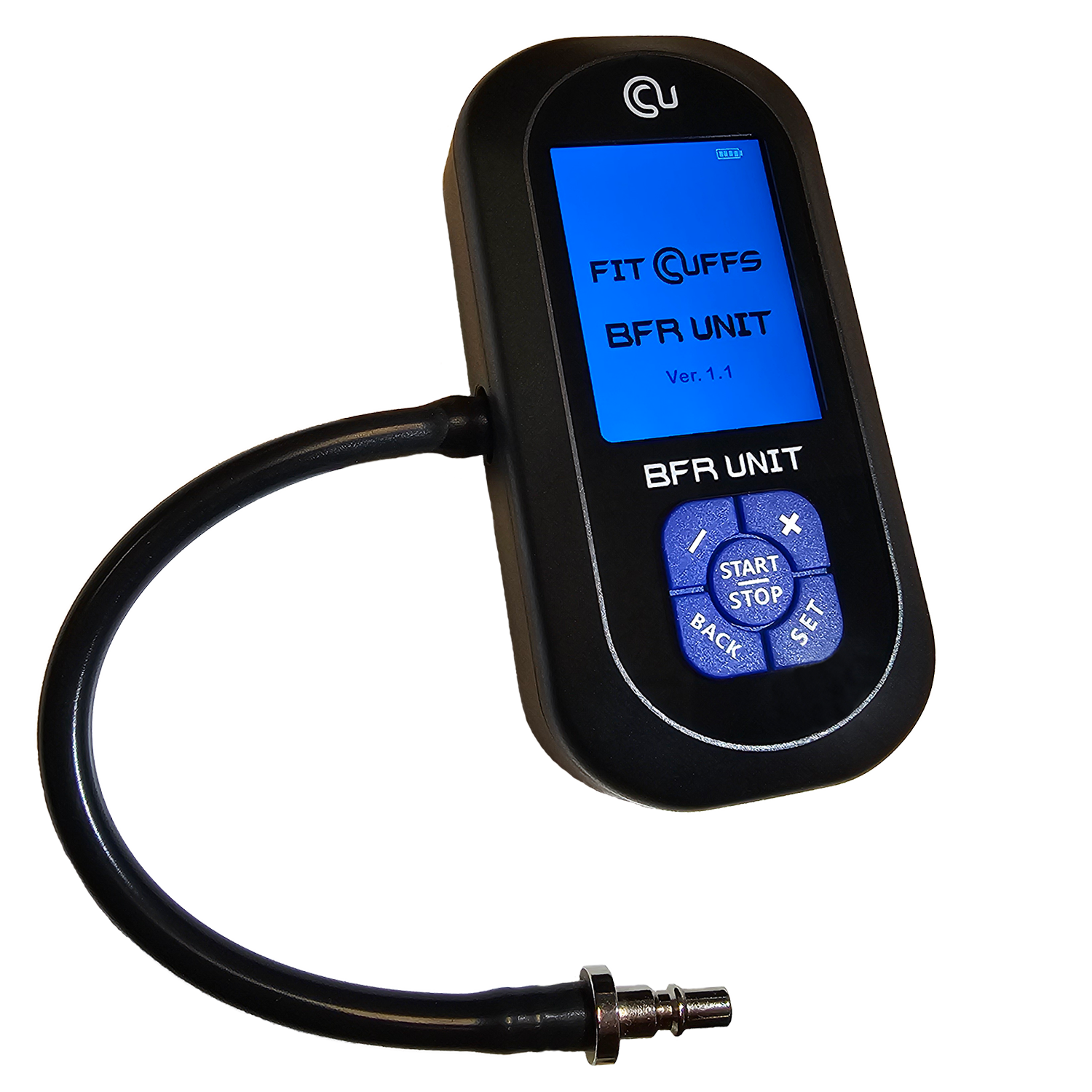
BFR Unit V1.1 with updated hardware and software, showing compact design, improved performance, and minor system upgrades for enhanced efficiency, reliability and readability

Read more about the BFR Unit V1.1

Buy the BFR Unit V1.1 | Complete

Buy the BFR Unit V1.1 & Optional Power Bank

Introducing the New & Improved BFR Unit V1.1: Smarter, Clearer & Built From User Feedback

The BFR community asked—and we listened. After months of gathering user feedback, testing in real-world training environments, and reviewing community input, we’re excited to officially unveil the BFR Unit V1.1. This updated version brings meaningful improvements to both the hardware and software experience, designed to make your Blood Flow Restriction training smoother, more reliable, and more effective.

While the original BFR Unit set a strong foundation, V1.1 refines that experience with small upgrades to enhance usability. Here’s what’s new:


🔋 Longer Battery-Life Span

This update is all about longevity and reliability, as nobody likes stopping a session early due to power issues. The V1.1 introduces a battery with a longer lifecycle, meaning more charge cycles before any performance drop.


🔄 Improved Auto-Adjust Pressure Feature

Consistency matters in effective BFR training. Thanks to upgraded internal logic and pressure-management algorithms, the V1.1 now features a refined Auto-Adjust Pressure system. This reduces large pressure dips during use, helping maintain a higher average pressure throughout your session.

The result? More effective BFR exposure and more confidence that the pressure adjustments are sufficient to avoid free-flow conditions during training.


⏱ Optimized Interval Settings (Now Fully Compatible With Intermittent BFR Protocols)

For athletes and clinicians who rely on structured intermittent protocols—especially the popular 30×15×15×15 reps Intermittent BFR protocol— BFR Unit V1.1 introduces yet another small but powerful software upgrade.

You can now adjust the first inflation period independently of the following cycles. This added flexibility supports longer “1. period inflation” and ensures full compatibility with protocols that require a unique initial inflation duration.


📺 Slightly Larger Screen + Larger Font Size

V1.1 also includes a subtle but impactful hardware upgrade: a slightly larger display. Combined with optimized UI spacing and improved font scaling, users might notice:

  • Better overall readability
  • Larger, clearer text
  • More comfortable viewing during movement

It’s a small upgrade that, for some, makes every session easier on the eyes.


👥 Built on Real Feedback, Designed for Real Use

The BFR Unit V1.1 is more than just a version bump. It’s the result of paying close attention to the community—how you train, what you need, and where the original version could evolve.

By combining subtle hardware improvements with small software and UI updates, V1.1 delivers a noticeably more refined and user-centered experience.


Ready to try the BFR Unit V1.1?

Whether you’re a physiotherapist working in rehab, strength coach, or an athlete dialing in your performance, the BFR Unit V1.1 is designed to make your sessions more effective, customizable and easier to control.

Thanks to everyone who has shared feedback, reviews, and suggestions. Your input directly shaped this upgrade—and will continue shaping future versions.


Links

Buy the BFR Unit V1.1 | Complete

Buy the BFR Unit V1.1 & Optional Power Bank

Read more about the BFR Unit

Consider following us on Instagram: @fitcuffs

Top page of the Fit Cuffs BFR Unit v1.1 gift box, highlighting key features of the blood flow restriction training system and core functionality of the updated Unit

Leave a Reply

Your email address will not be published. Required fields are marked *

March 10, 2026

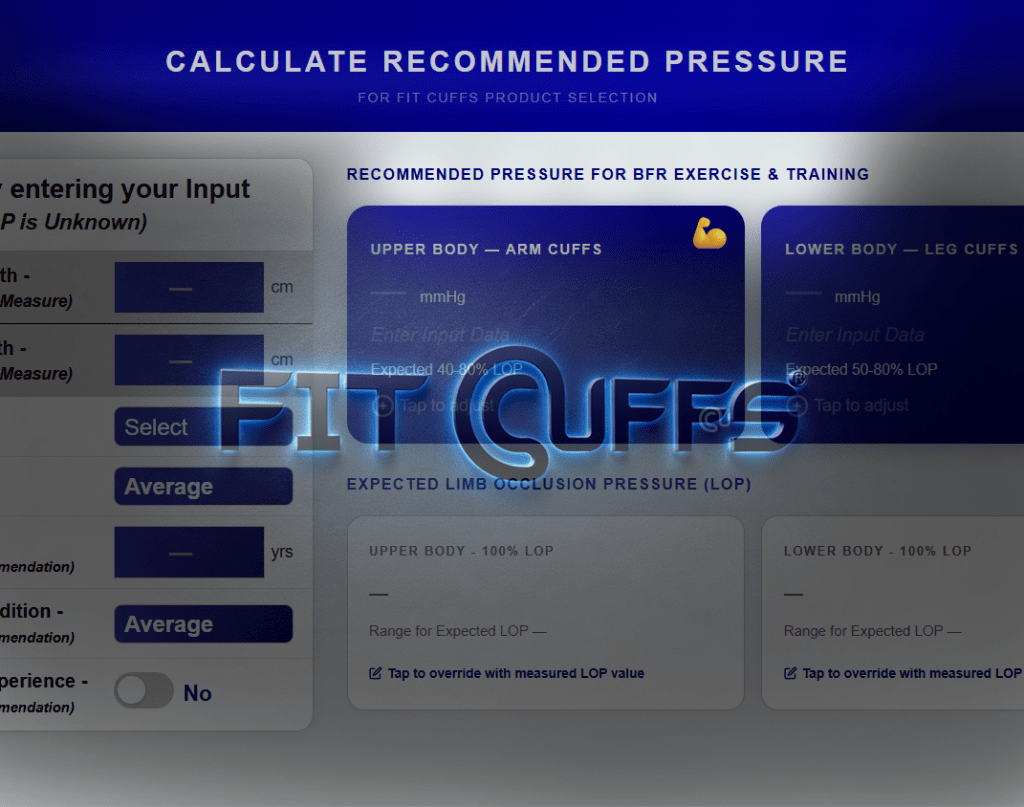
The Science Behind the Fit Cuffs Pressure Calculator V2

Does auto adjusted blood flow restriction (BFR) training improve muscle growth and strength compared to fixed-pressure cuffs? In this first 8-week within-subject study using the Fit Cuffs BFR system, researchers found no meaningful differences in hypertrophy, strength gains, or perceived discomfort between autor and non-auto conditions. When pressure was prescribed relative to limb occlusion pressure (LOP) and training variables were standardized, both approaches produced significant improvements. Here’s what coaches, clinicians, and lifters need to know about auto vs fixed-pressure BFR.
February 24, 2026

Automatic Pressure adjustments during Blood Flow Restricted (BFR) Exercise – A randomized within-subject 8-week trial

Does auto adjusted blood flow restriction (BFR) training improve muscle growth and strength compared to fixed-pressure cuffs? In this first 8-week within-subject study using the Fit Cuffs BFR system, researchers found no meaningful differences in hypertrophy, strength gains, or perceived discomfort between autor and non-auto conditions. When pressure was prescribed relative to limb occlusion pressure (LOP) and training variables were standardized, both approaches produced significant improvements. Here’s what coaches, clinicians, and lifters need to know about auto vs fixed-pressure BFR.

Introducing The Updated BFR Unit V1.1 For Blood Flow Restriction Training
This website uses cookies to improve your experience. By using this website you agree to our Data Protection Policy.
Read more