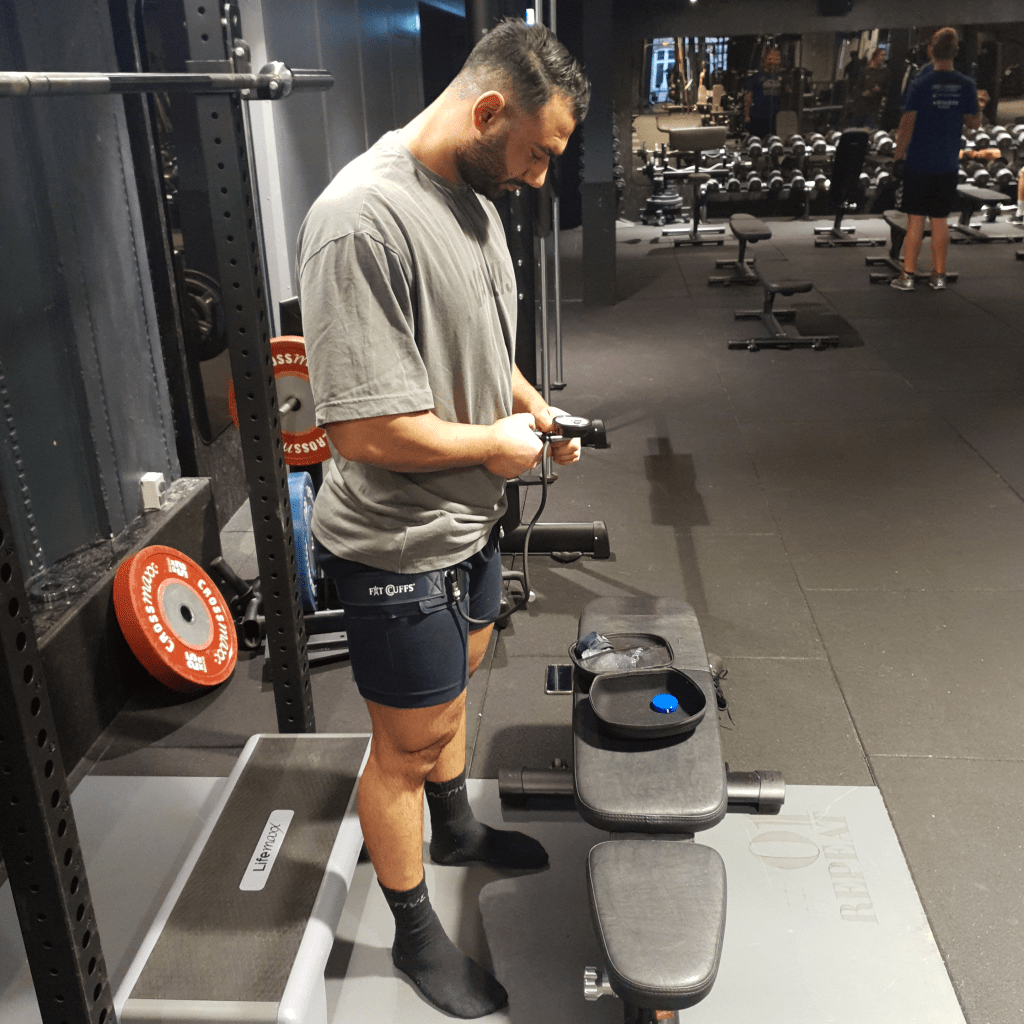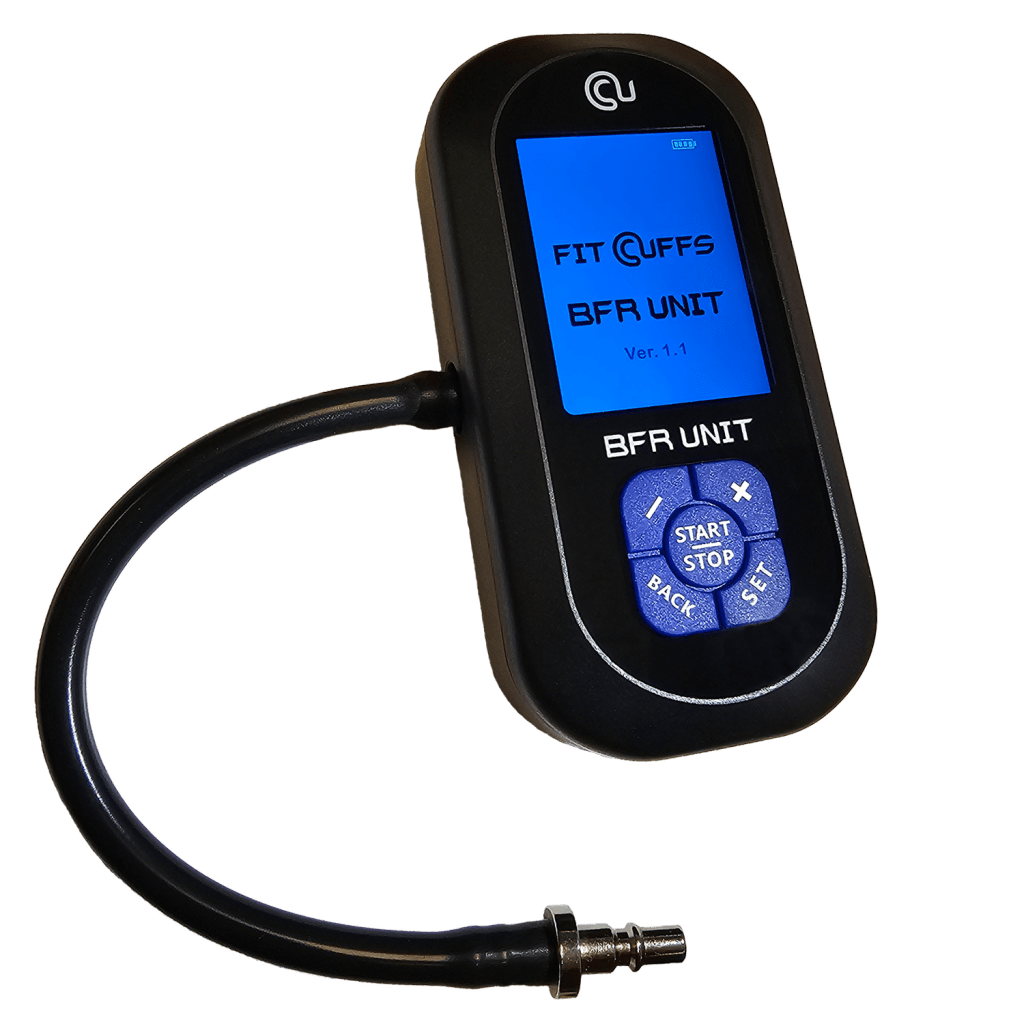


In the video you will find Bulgarian split squat with an elevated front foot for increased range of motion. Though, the most import aspect of this relatively low-load setup, is the augmentation of BFR for contralateral leg gain.
Maintaining or improving muscle mass and strength is imperative for higher-level sports and athletic performance.
But for some individuals into training and rehab, BFR is primarily seen as a tool for the injured or otherwise impaired individuals. Thus, recently the body of research on BFR has expanded enormously and repeatedly shows to be a game changer for rapid improvement of performance. This is a soundly reason why, BFR is currently being programmed into the training routines of high-level athletes all around the world.
A relevant implication of BFR for the impaired or for the high performing athlete, is the use of single leg exercises to improve strength in both the proximal and contralateral limb relative to the cuff, as recently discovered by Bowman et al:
Methods: RCT, conducted on healthy participants by a standardized 6-week BFR protocol. BFR training on 1 extremity compared to a control group, specified as BFR-Limp vs No-BFR-Limp vs. control.
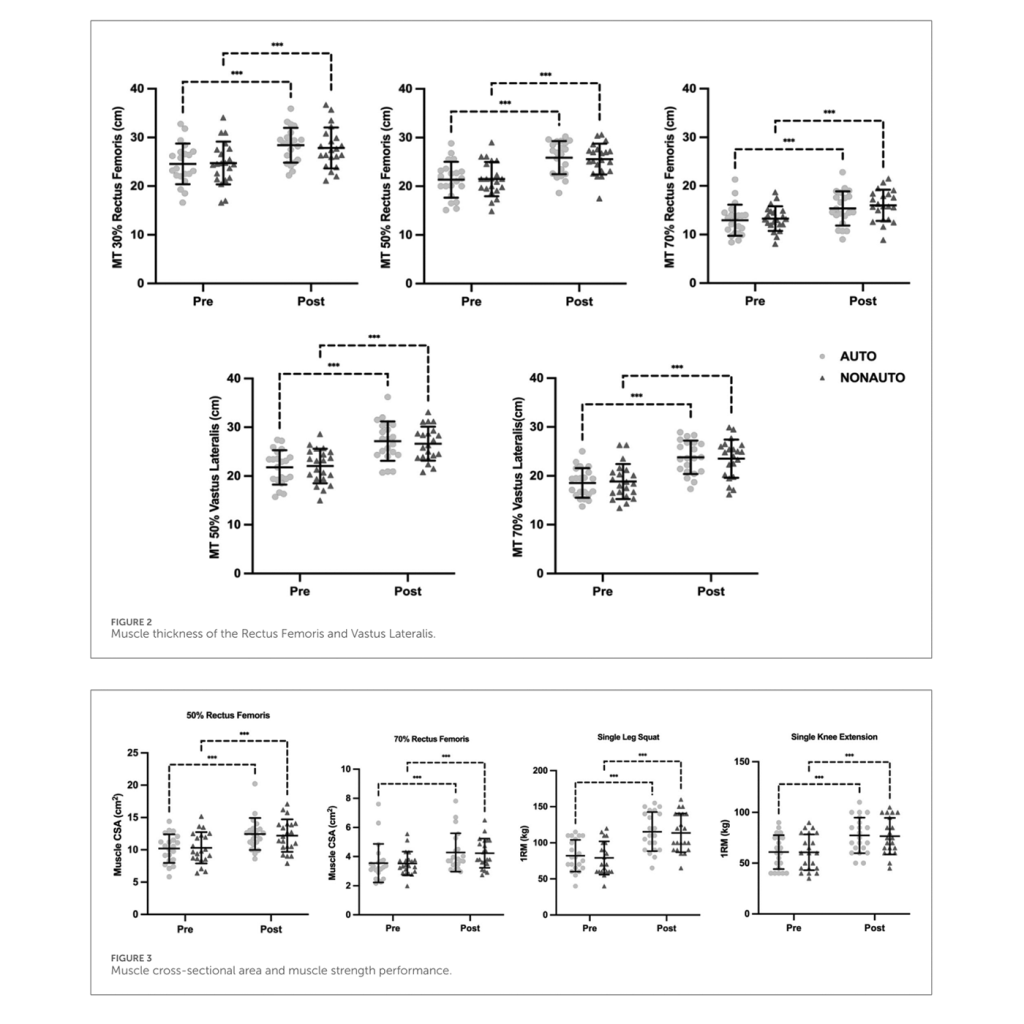
Results: A statistically 2-3 fold greater increase in strength was seen proximal and distal to the cuff (BFR-Limp vs control).
Additionally, a significant increase occurred in the thigh girth and knee extension strength for the No-BFR -Limp compared with the control group as (2.3% vs 0.8%) and (8% vs 3%) respectively.
Conclusion: BFR training led to a 2-3 fold greater increase in muscle strength. BFR training had similar strengthening effects on both proximal and distal muscle groups relative to the cuff. Gains in the contralateral limb may corroborate a systemic or crossover effect.
Source:
Bowman et al. (2019) Proximal, Distal, and Contralateral Effects of Blood Flow Restriction Training on the Lower Extremities: A Randomized Controlled Trial.