
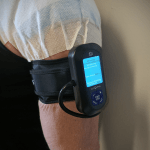

A newly published study examined how different blood flow restriction (BFR) pressures impact motor performance, fatigue, recovery, and physiological responses during static balance exercises. Twenty-four active male and female participants performed three sets of 60-second balance exercises on a BOSU ball under three conditions: high BFR pressure (80% arterial occlusion pressure, AOP), low BFR pressure (40% AOP), and a SHAM condition (minimal 30 mmHg pressure). Muscle activity, oxygenation in the quadriceps, and perceptions of pain and effort were measured, alongside motor performance (squat jump height) before, immediately after, and at various intervals post-exercise.
Key Findings:
Motor Performance Fatigue: Both high (80% AOP) and low (40% AOP) BFR pressures significantly increased motor performance fatigue, reflected by a decline in squat jump height. Fatigue was greatest in the high-pressure condition (16.4% decrease) compared to 9.1% for low BFR and 5.4% for SHAM. However, performance differences between conditions dissipated within two minutes post-exercise.
Physiological Responses: High BFR pressure led to the most significant increases in quadriceps muscle activity and decreases in oxygenation, especially in males, indicating heightened muscular and metabolic strain. Participants reported the highest levels of perceived exertion and leg pain in the high-pressure BFR condition.
Balance Performance: Despite greater fatigue in the BFR conditions, balance performance remained unaffected across all pressures, with steady postural sway measurements. Notably, females demonstrated lower sway velocity and distance than males, suggesting potential gender differences in balance control.
Conclusions and Implications:
High BFR pressure (80% AOP) during static balance exercise appears to provide the strongest physiological stimulus, which could lead to beneficial adaptations like muscle hypertrophy. This method could be particularly useful for populations unable to engage in heavy resistance training, such as those recovering from musculoskeletal injuries or older adults, as it combines balance and strength training. Despite the greater fatigue with BFR, the unaltered balance performance suggests this technique can safely boost training intensity without compromising stability.
Takeaways for Trainers and Practitioners:
For trainers, physical therapists, and others working with clients focused on balance, strength, or rehab, incorporating BFR with balance exercises could be an innovative approach. However, it’s essential to note that high BFR pressure, while effective in eliciting stronger physiological responses, also leads to higher levels of exertion and discomfort, so careful consideration of the client’s tolerance and goals is essential. Additionally, the SHAM condition’s lower fatigue and discomfort levels may be preferable for beginners or those who are just starting with BFR techniques.
In conclusion, static balance exercise combined with high BFR pressure provides a potent stimulus for physiological and perceptual changes without compromising balance performance. This unique training method could benefit those who require a low-impact alternative to traditional resistance training, offering a pathway to achieve both strength and stability improvements with minimal equipment. As BFR training continues to gain traction, further research could explore its long-term effects and optimize protocols for different demographics and fitness goals.
Source: Bielitzki et al. (2024) Acute effects of static balance exercise combined with different levels of blood flow restriction on motor performance fatigue as well as physiological and perceptual responses in young healthy males and females
https://link.springer.com/article/10.1007/s00421-023-05258-5