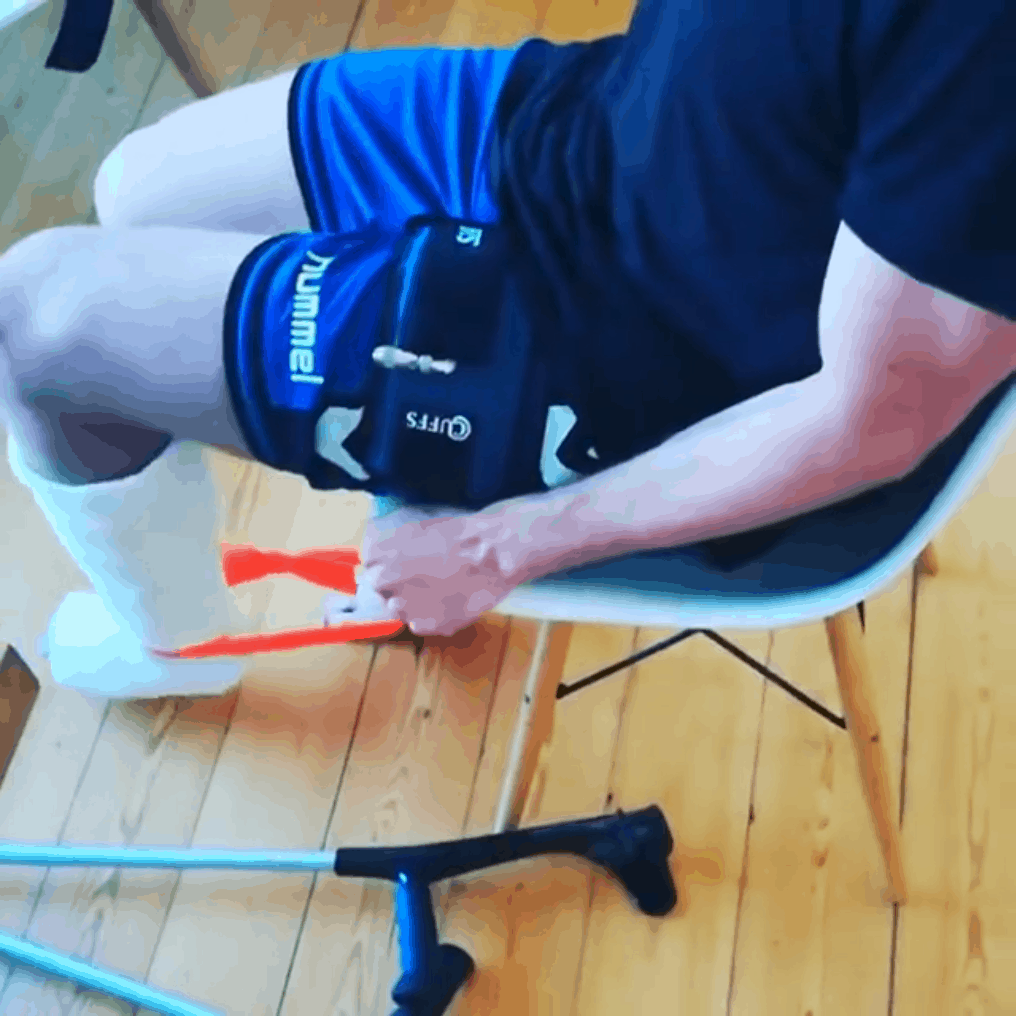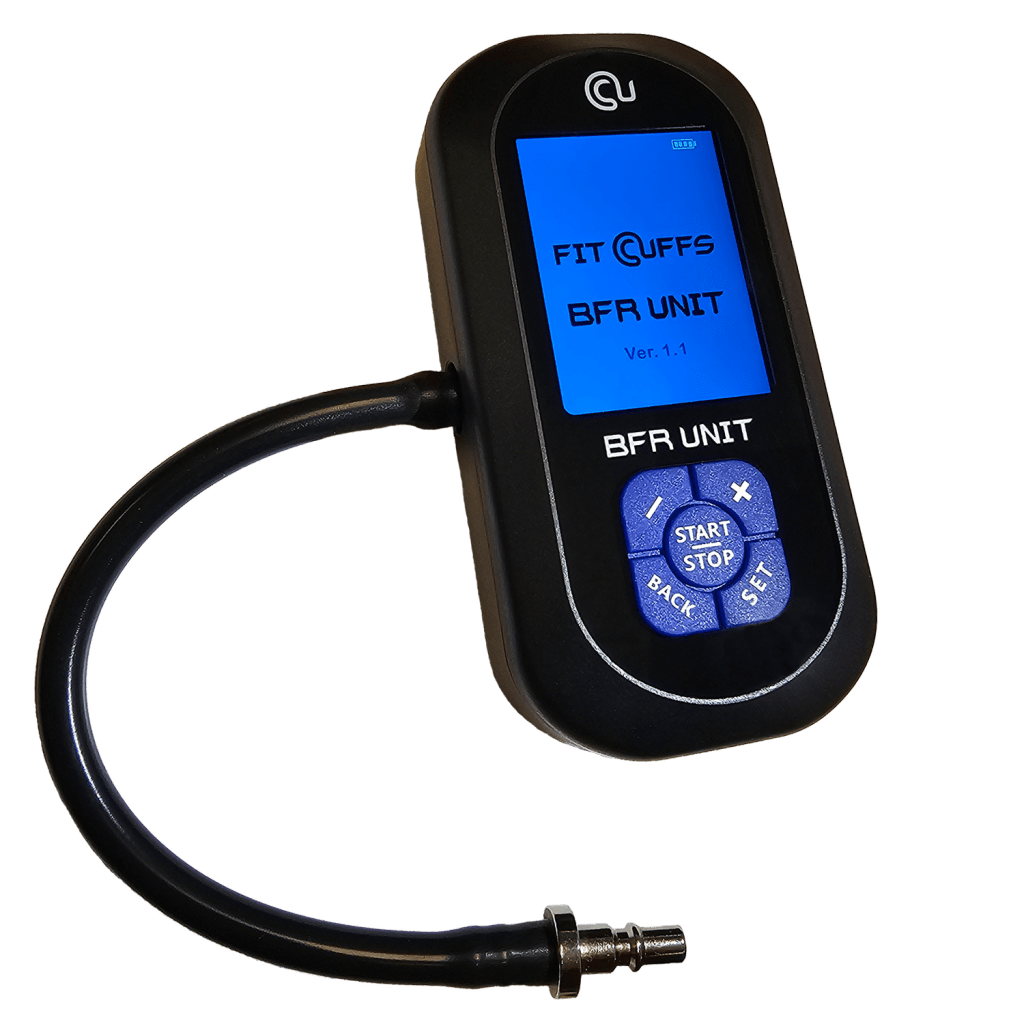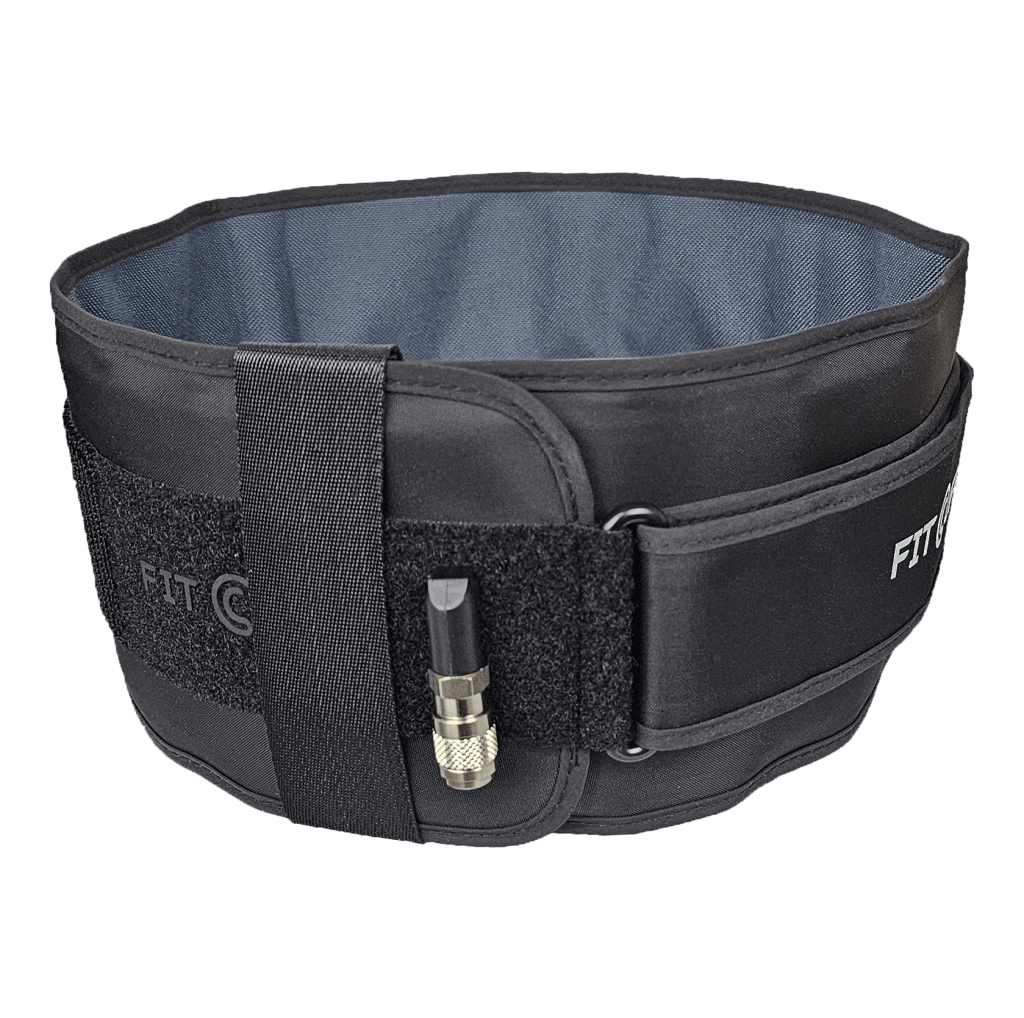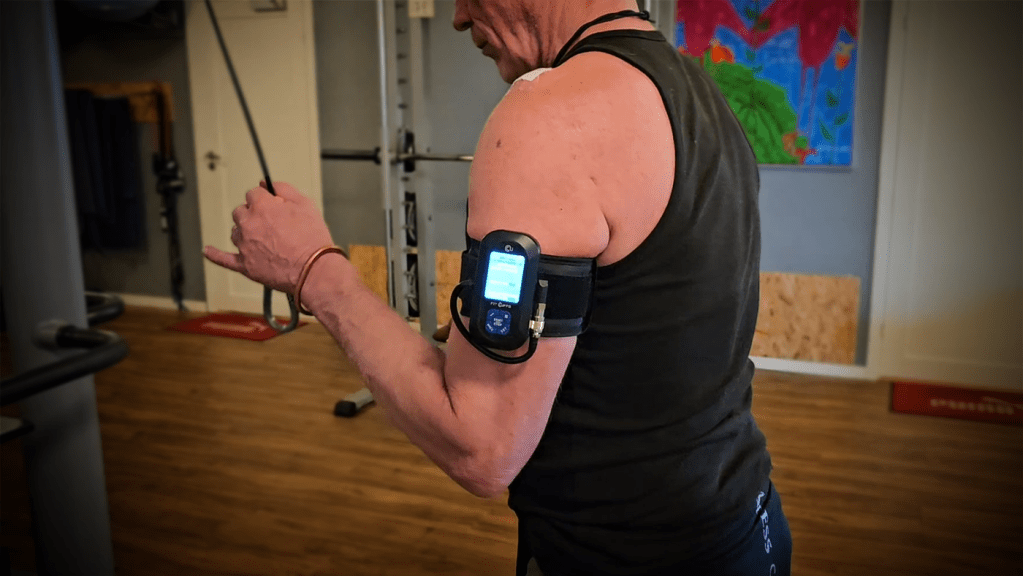



This post is about fast-track rehab with Blood Flow Restriction (BFR) Training after a dislocated and plastered ankle fracture.
The incidence of fractures in DK/year is approx. 80,000, of which 3,000-4,000 are ankle-related.
Most often, the fracture is plastered, which can include marrow sewing, osteosynthesis and rarely external fixation. For the first 3 weeks, load is inhibited, at approx. 3 weeks post op. gradually increased weight bearing is recommended.
Therefore, one should be careful about starting exercising, to avoid compromising the healing mechanisms of the bones. As adjacent to the fracture, muscles, arteries and nerves can be injured due to the sharp surfaces of the fracture or during the operation, which potentially complicates the rehab.
Because of the required immobilization following operation, severe muscle atrophy (muscle loss) will occur. As ankle fractures results in longer periods without weight bearing and local immobility, the rehabilitation options are very limited in the early phase.
Though, it has been proven that atrophy can be reduced by a swift implementation of BFR, in respect to fracture type and possible complications. By reducing the associated loss of muscle mass, one could expect a shorter rehab period and therefor a faster return-to-play.
By combining BFR with conventional low-load resisted knee-extension and knee-flexion exercises you got an effective combo to counter act the atrophy of the thighs, hamstrings and the superficial calf muscles.
Considering the recommendation of high frequency training as 1-2 daily for an effective retention of muscle mass for, elastic bands are being used as a low practical setup for 3 consecutive weeks.
Adjacent to this primary effect, BFR may reduce the fracture associated pain (hypoanalgesic effect) and improve overall functioning which may translate to less long-term disability, which is especially relevant for the elderly.
Source:
Cancio et al. (2019) Blood Flow Restriction Therapy after Closed Treatment of Distal Radius Fractures.
Loenneke et al. (2012) Rehabilitation of an osteochondral fracture using blood flow restricted exercise: A case review.
(3) Bittar et al. (2017) Effects of blood flow restriction exercises on bone metabolism: a systematic review.