

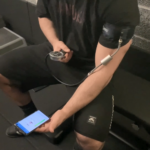
This Blog post is about some relevant considerations for BFR in knee-rehab.
First of all, there is no such thing as an optimal rehab regime, and secondly, optimal rehab must be individualized. No people are alike, the same goes for any injury, because of this an individual approach is always recommended.
Individual components such as daily activity, type of surgery, pain levels and not at least personal preference of exercises should be considered. But for most people or relevant stakeholders, the expected time to return to sport or daily activity is of high priority.
Especially in cases of load or weight bearing restrictions, the application of BFR is an effective way to attenuate muscle loss as a supplement to other rehab modalities, as this can accelerate muscle strength and function much earlier compared to a conventional rehab protocols. Though, as always consider the healing properties of subsequent tissues.
E.g. post ACL reconstruction, muscle strength and function can conceivably be reestablished at a higher rate than the remodelling properties of the transplanted tendon. But by following the guidelines and time for return to play, the inclusion of BFR can lead to greater functional symmetry (1) and probably higher estimated pre-injury capacity (2), which are both proven to lower the risk of reinjury.
In rare occasions there can be adverse side effects or other contra indications that inhibits the use of BFR, especially for early stage rehab (0-2 weeks post op.). That is why it is recommended to consult the surgeon before implementation of early stage BFR and always be aware of any additional swelling compared to other conventional exercises.
Conclusion: BFR should be used on the basis of an individual preference with consideration of physical components, such as healing properties of surrounding tissues and potential contra indications.
Video material from @cjmcfarland17
Source:
(1) Kilgas et al (2019) -Exercise with Blood Flow Restriction to Improve Quadriceps Function Long After ACL Reconstruction.
(2) Wellsandt et al. (2017) Limb Symmetry Indexes Can Overestimate Knee Function After ACL Injury.