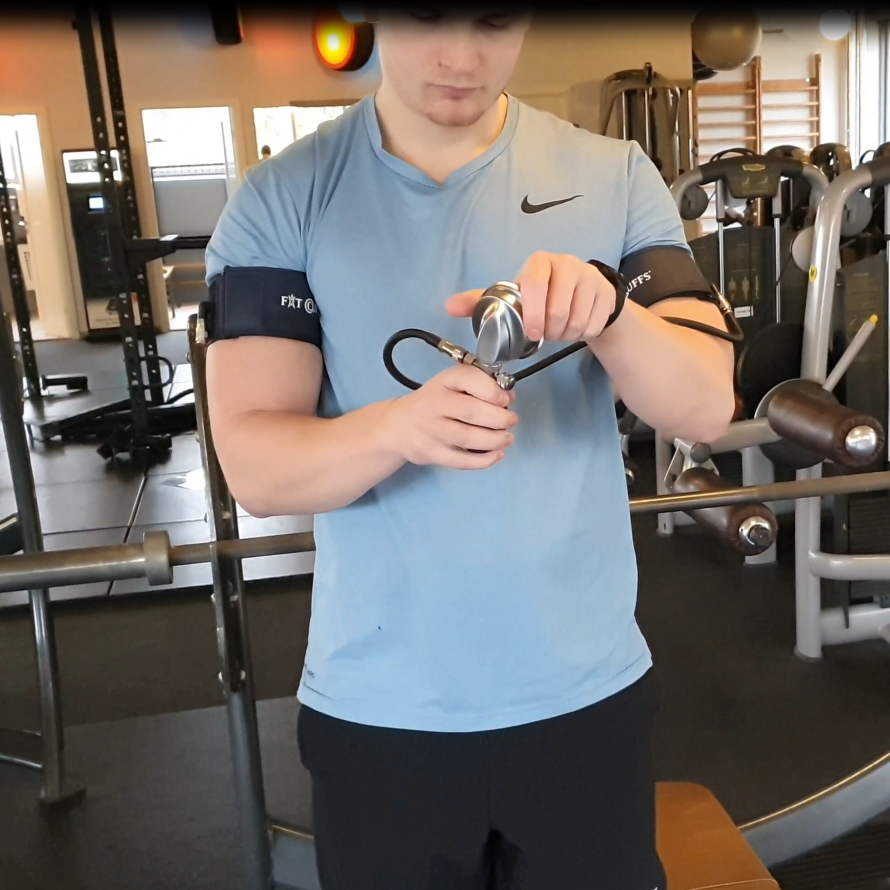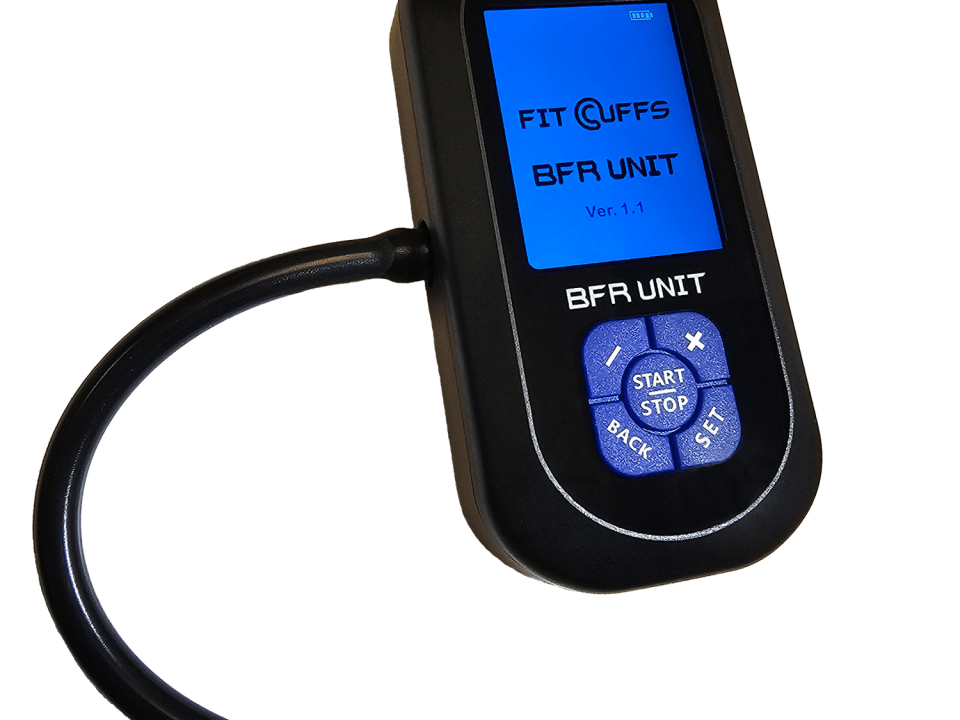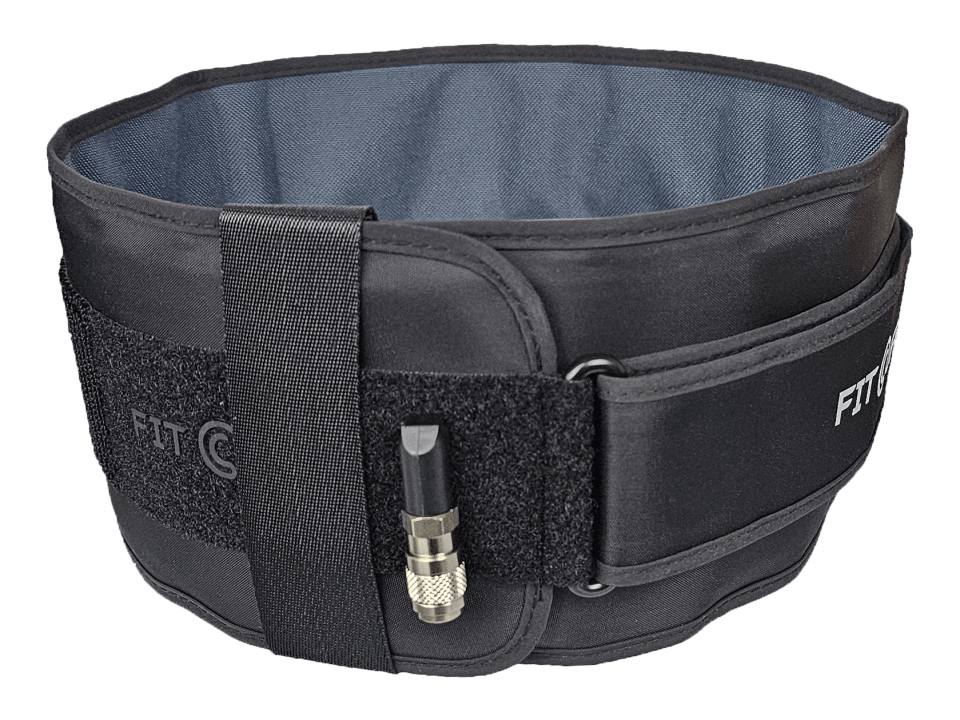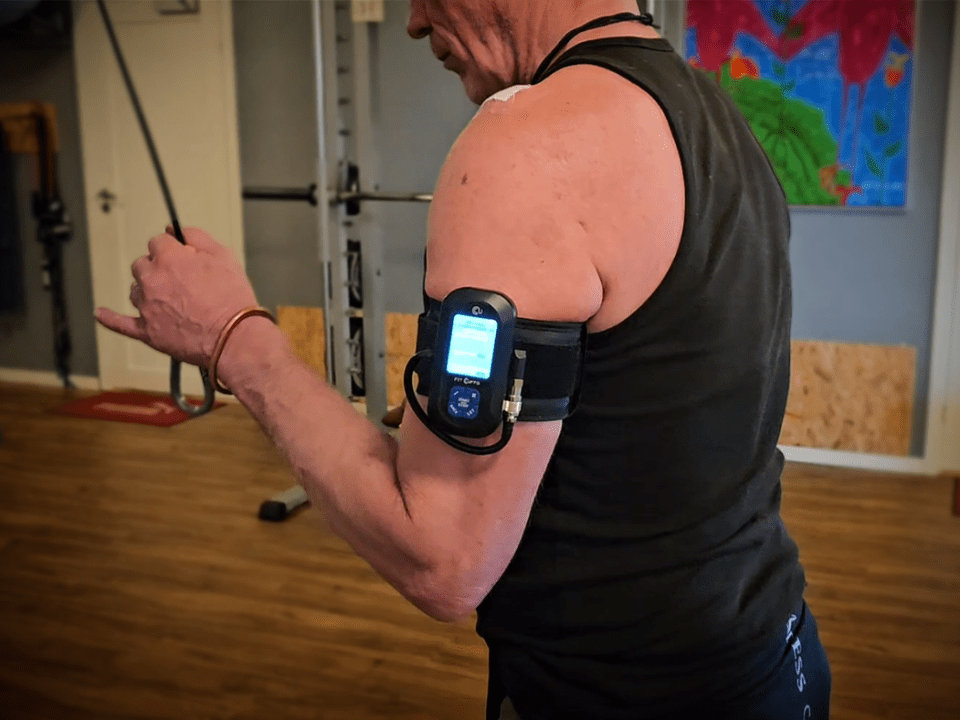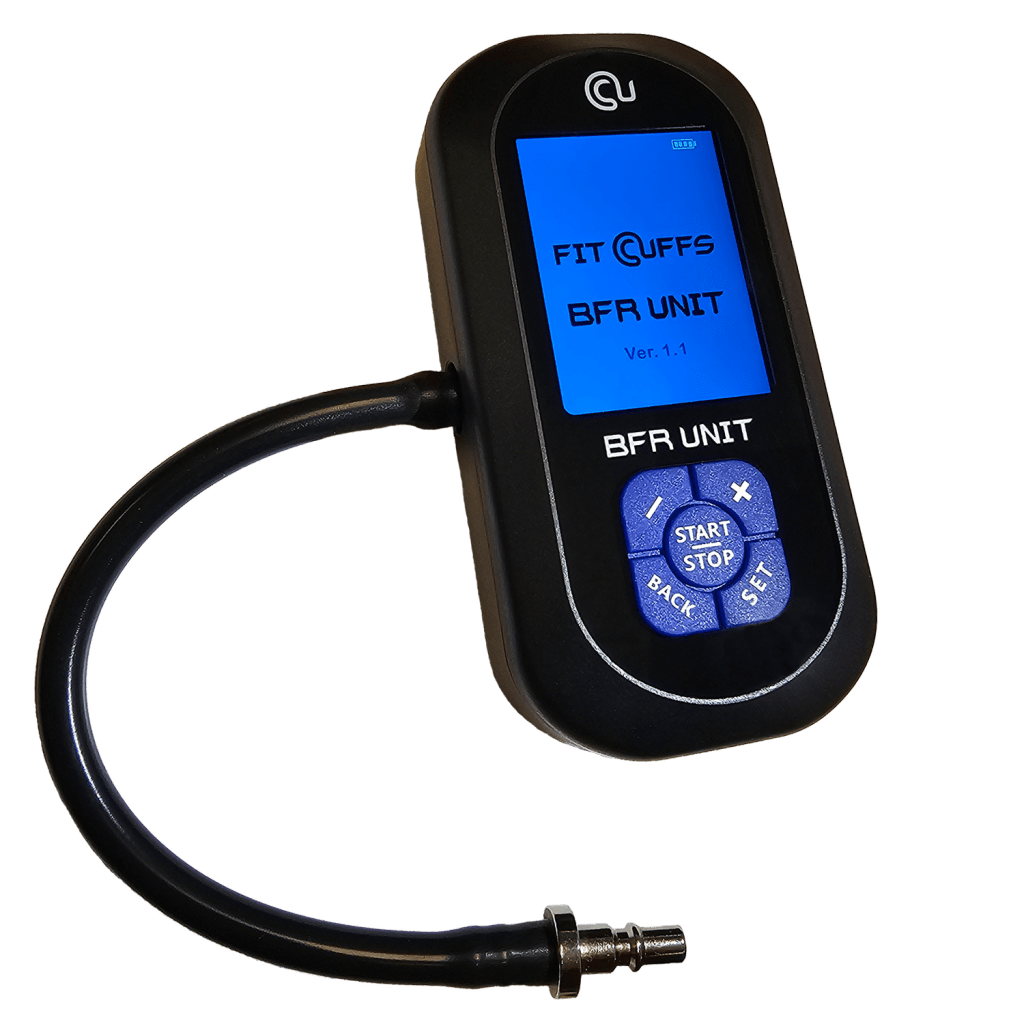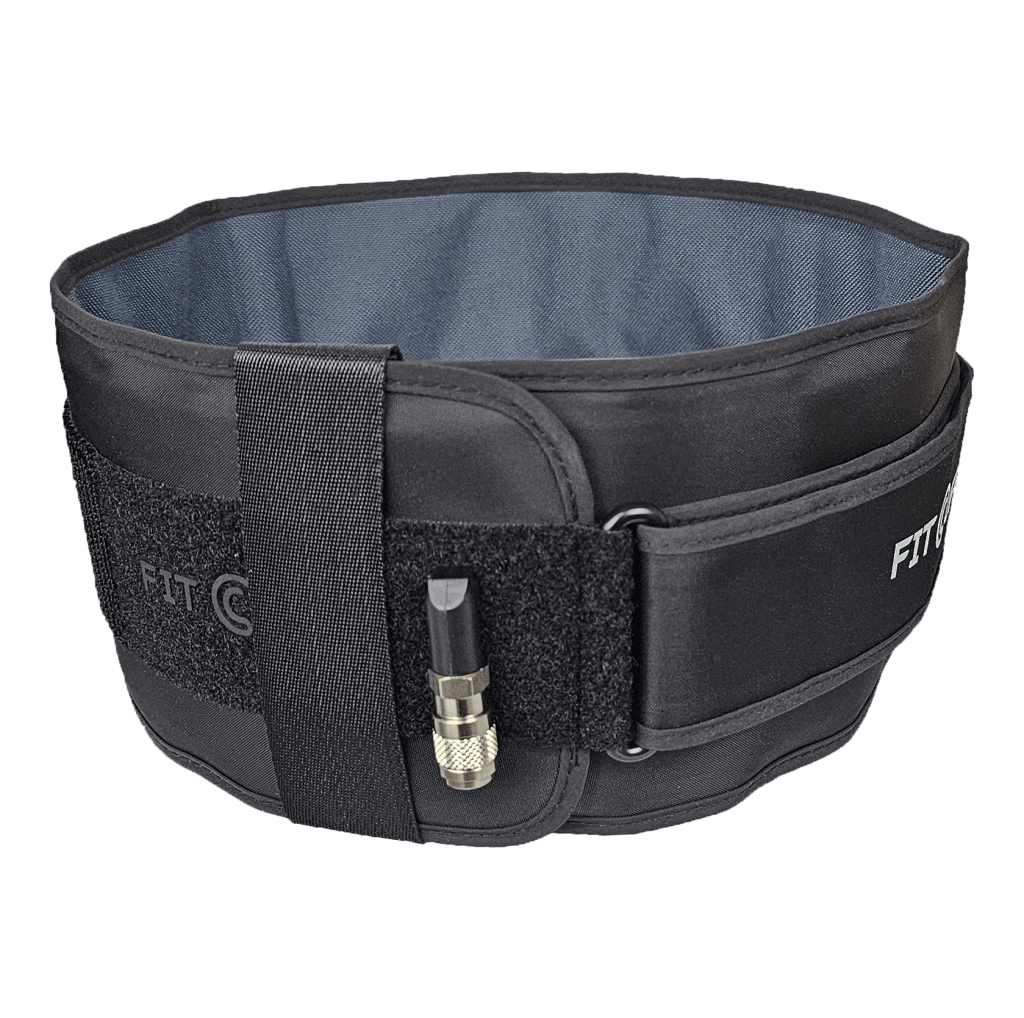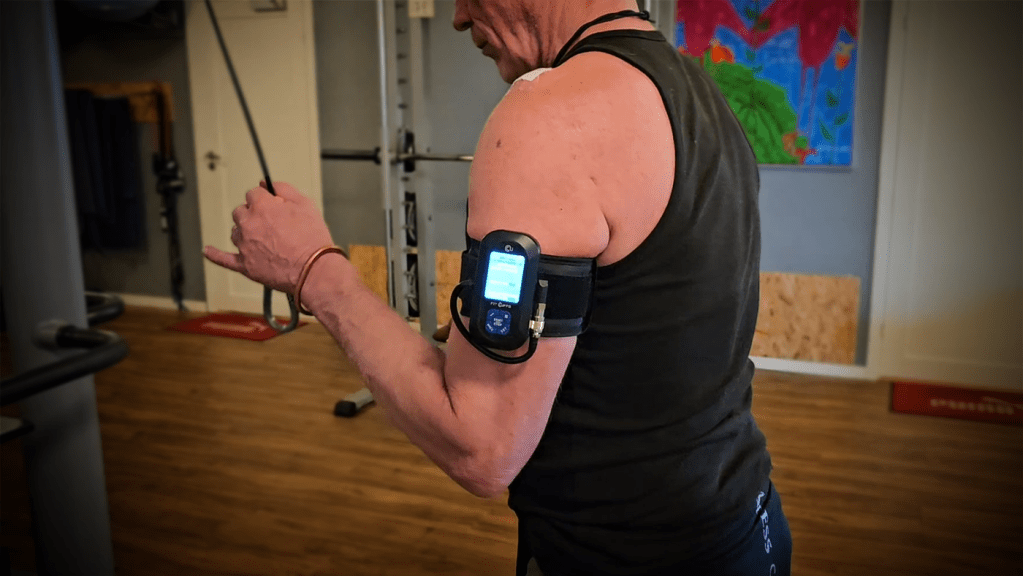

If you follow the link above You will see a selection of your favorite disco pump exercises augmented by BFR
Military Press – the major general of the shoulder complex, Pull Down – the Lat expander, King Bench Press and Popeyes one and only exercise, the Curl.
In the text below the disco lights are turned off and we run through a relatively new study concerning BFR for the upper-extremity by Bowman et al. (2020).
Background:
Blood flow restriction (BFR) training with low-load has shown to induce similar physiological changes to high-load with the benefit of less tissue stress. For comparison of Low-load training protocols, BFR reduces the workload (number of repetitions) needed to reach the point of fatigue compared with similar training without BFR.
In this study the authors compared One extremity low-load BFR vs No-BFR low-load (control group) on strength and hypertrophy for muscle groups proximal, distal, and contralateral to the cuff.
Methods:
A prospective, RCT, as healthy subjects were randomized into a 6-week low-weight training program with or without BFR on 1 Arm. Outcome measures included limb circumference and strength, between BFR-arm vs No-BFR-arm, BFR group vs control group, and No-BFR-arm vs control group.
Results:
A total of 24 subjects (14 BFR and 10 control subjects) completed the training intervention.
Significantly greater gains were observed in dynamometric strength for proximal musculature in the BFR-arm group:
Shoulder scaption, 30%
Shoulder flexion, 23%
Shoulder abduction, 22%
And distal musculature: grip strength, 13%
Vs both the No-BFR-arm and the control group (P <.05). Arm and forearm circumferences significantly increased in the BFR-arm vs No-BFR-arm and control group (P = .01). The non-BFR-arm group demonstrated greater grip strength vs control group (9%, P < .01). No adverse events were reported. Conclusion: Low-load BFR training provided a greater increase in strength and hypertrophy in the upper-extremity proximal and distal muscle groups relative to the cuff vs No BFR Low-load training. As The non-BFR-arm showed a significant increase in grip strength compared vs control group, indicating a potential systemic effect. Low-load BFR training could significantly benefit patients who are unable to lift heavy with conservative managed conditions such as osteoarthritis, Subacromial impingement syndrome (SIS), muscle strain, and tendinopathy. Likewise, BFR can probably accelerate return to preoperative strength levels in rotator cuff repairs, labral repairs, shoulder and elbow arthroplasty, and upper-extremity traumatic injuries. Source: Bowman et al. (2020) Upper-extremity blood flow restriction- the proximal, distal, and contralateral effects- a randomized controlled trial.