
101 BFR Research Papers
▼ What's New In 2026 ▼
▼ What's New In 2025 ▼
2. Smith et al. (2025) Effectiveness of blood flow restriction training during a taper phase in basketball players
3. Xu et al. (2025) Effect of four weeks of repeated sprint training with blood flow restriction on upper limb microcirculation in boxers
4. Yin et al. (2025) Physiological adaptations and performance enhancement with combined blood flow restricted and interval training - A systematic review with metaanalysis
5. Feng et al. (2025) Does exercise training combined with blood flow restriction improve muscle mass, lower extremity function, and walking capacity in hemiplegic patients. A randomized clinical trial
6. Hughes et al. (2025) Blood flow restriction- methods and apparatus still matter
7. Souza et al. (2025) Determining minimum cuff pressure required to reduce arterial blood flow at rest
8. Zeitlin et al. (2025) Blood flow restriction training compared to conventional training in people with knee pain- a systematic review with meta-analysis
9. Sørensen et al. (2025) Effects of Blood-Flow Restricted Resistance Exercise Versus Neuromuscular Exercise on Mechanical Muscle Functionin Adults With Chronic Knee Osteoarthritis
10. Vehrs et al. (2025) Assessing Arterial Occlusion Pressure- A Comparison of Manual and Automated Cuff Inflation Using Doppler Ultrasound
11. Gkari et al. (2025) The Effects of Short-Duration Ischemic Preconditioning on Horizontal and Vertical Jump Performance in Male and Female Track and Field Jumpers
12. Sánchez-Valdepeñas et al. (2025) Effects of velocity loss with blood flow restriction in full squat on strength gains, neuromuscular adaptations, and muscle hypertrophy
13. Wang et al. (2025) Dorsalis pedis artery thrombosis after blood flow restriction training in an elite rugby player- a complex and cautionary tale
14. Kataoka et al. (2025) Submaximal low-load resistance exercise with blood flow restriction produces similar results to low-load exercise to failure for muscle size and strength, but not endurance
15. Rolnick et al. (2025) Impact of blood flow restriction cuff design on upper body exercise A randomized crossover trial in resistance-trained adults
16. Franz et al. (2025) Passive Blood-Flow-Restriction Exercise’s Impact on Muscle Atrophy Post-Total Knee Replacement A Randomized Trial
17. Sophie-Jayne et al. (2025) Blood Flow Occlusion Superimposed on Low-Volume, Low-Intensity Knee Extensions Does Not Evoke Hypoalgesia: A Pilot Study
18. Chen et Yun (2025) Influence of blood flow restriction training combined with resistance training on physical function of college football
19. Bennet et al. (2025) An evaluation of progressive blood flow restricted resistance training and exercise preferences in individuals with Rheumatoid Arthritis
20. Schmidt et al. (2025) The Impact of Blood Flow Restriction and Resistance Training on Functional Outcomes and Fatigue in People with Multiple Sclerosis
21. Bennet et al. (2025) An evaluation of progressive blood flow restricted resistance training and exercise preferences in individuals with Rheumatoid Arthritis
22. Rossi et al. (2025) “CLINICAL-BFR”- An exploratory blood flow restriction protocol focusing on clinical application
23. Hjortshoej Jensen et al. (2025) Effect of Low Load Blood Flow Restricted Training Versus Heavy Slow Resistance Training in Unilateral Patellar Tendinopathy- A Randomized Clinical Trial
24. Liu et al. (2025) Blood flow restriction during small-sided games enhances physiological adaptations and performance improvements in well-trained basketball players- A randomized controlled trial
25. De Smet et al. (2025) Implementation of blood flow restriction training in the acute geriatric unit
▼ Prehab & Rehab -Further Specification ▼
2. Cuyul-Vasquez et al. (2020) The addition of blood flow restriction to resistance exercise in individuals with knee pain- a systematic review and meta-analysis
3. Cerqueira et Brito Vieira (2020) Letter to the Editor – The addition of blood flow-restriction to resistance exercise in individuals with knee pain A systematic review and meta-analysis
4. Lorenz et al. (2021) Current Clinical Concepts- Blood Flow Restriction Training
5. Bielitzki et al (2021) Time to Save Time- Beneficial Effects of BFR and the Need to Quantify the Time Potentially Saved by its Application during Musculoskeletal Rehabilitation
6. Cant et al. (2020) Quadriceps strengthening with blood flow restriction for the rehabilitation of patients with knee conditions- A systematic review with meta-analysis
7. Hughes et al. (2017) Blood flow restriction training in clinical musculoskeletal rehabilitation a systematic review and meta-analysis
8. Slysz et al. (2016) The efficacy of blood flow restricted exercise A systematic review & meta-analysis
9. Y Takarada, H Takazawa & N Ishii (2000) Applications of vascular occlusion diminish disuse atrophy of knee extensor muscles
10. William et al. (2017 Blood Flow Restriction Training- Implementation into Clinical Practice
11. Jakobsen et al. (2022) Blood flow restriction added to usual care exercise in patients with early weight bearing restrictions after cartilage or meniscus repair in the knee joint: a feasibility study
13. Ferlito et al. (2020) The blood flow restriction training effect in knee osteoarthritis people- a systematic review and meta-analysis
14. Segal et al. (2015) Efficacy of Blood Flow Restricted Low-Load Resistance Training in Women with Risk Factors for Symptomatic Knee Osteoarthritis
15. Harper et al. (2019) Blood-Flow Restriction Resistance Exercise for Older Adults with Knee Osteoarthritis- A Pilot Randomized Clinical Trial
16. Ferraz et al. (2018) Benefits of Resistance Training with Blood Flow Restriction in Knee Osteoarthritis
17. Bryk et al. (2016) Exercises with partial vascular occlusion in patients with knee osteoarthritis a randomized clinical trial
18. Grantham et al. (2021) Does blood flow restriction training enhance clinical outcomes in knee osteoarthritis a systematic review and meta-analysis
19. Roschel et al. (2016 Low-intensity Resistance Training With Blood Flow Restriction Increases Muscle Function And Mass In Rheumatoid Arthritis Alvarez et al. (2020) Comparison of Blood Flow Restriction Training versus Non-Occlusive Training in Patients with Anterior Cruciate Ligament Reconstruction or Knee Osteoarthritis- A Systematic Review
20. Jønsson et al. (2021) Feasibility and estimated efficacy of blood flow restricted training in female patients with rheumatoid arthritis: a randomized controlled pilot study
20. Tennent et al. (2017) Blood Flow Restriction Training After Knee Arthroscopy- A Randomized Controlled Pilot Study
21. Blood Flow Restriction Training in Patients With Weight Bearing Restrictions After Knee Surgery. Not finished A/O 2020)
21. Finished in 2022 – Jakobsen et al. (2022) Blood flow restriction added to usual care exercise in patients with early weight bearing restrictions after cartilage or meniscus repair in the knee joint: a feasibility study
22. The Effect of Blood Flow Restriction Training on Muscle Atrophy Following Knee Surgery. (Not finished A/O 2020)
23. 3b Rush University Medical Center (2020) Blood Flow Restriction Following Hip Arthroscopy. Not finished A/O 2021)
24. Noyes et al. (2021) Blood Flow Restriction Training Can Improve Peak Torque Strength in Chronic Atrophic Postoperative Quadriceps and Hamstrings Muscles DePhillipo et al. (2018) – blood flow restriction therapy after knee surgery- indications, safety considerations, and postoperative protocol
26. Ohta et al. (2003) Low-load resistance muscular training with moderate restriction of blood flow after anterior cruciate ligament reconstruction
27. Zargi et al. (2018) The effects of preconditioning with ischemic exercise on quadriceps femoris muscle atrophy following anterior cruciate ligament reconstruction- a quasi-randomized controlled trial
28. Charles et al. (2020) Systematic Review of the Effects of Blood Flow Restriction Training on Quadriceps Muscle Atrophy and Circumference Post Acl Reconstruction
29. Alvarez et al. (2020) Comparison of Blood Flow Restriction Training versus Non-Occlusive Training in Patients with Anterior Cruciate Ligament Reconstruction or Knee Osteoarthritis- A Systematic Review
30. Kacin et al. (2021) Functional and molecular adaptations of quadriceps and hamstring muscles to blood flow restricted training in patients with ACL rupture
31. Jack et al. (2023) Blood Flow Restriction Therapy Preserves Lower Extremity Bone and Muscle Mass After ACL Reconstruction
32. Prue et al. (2022) Side Effects and Patient Tolerance with the Use of Blood Flow Restriction Training after ACL Reconstruction in Adolescents: A Pilot Study
33. Koc et al. (2022) Effect of low-load exercise on blood flow after anterior cruciate ligament reconstruction: A systematic review
35. Korakakis et al. (2018) Blood Flow Restriction induces hypoalgesia in recreationally active adult male anterior knee pain patients allowing therapeutic exercise loading
36. Constantinou et al. (2022) Comparing hip and knee focused exercises versus hip and knee focused exercises with the use of blood flow restriction training in adults with patellofemoral pain
38. Franz et al. (2022) Impact of a Six-Week Prehabilitation With Blood-Flow Restriction Training on Pre- and Postoperative Skeletal Muscle Mass and Strength in Patients Receiving Primary Total Knee Arthroplasty
39. Franz et al. (2023) Blood flow restriction training in the pre- and postoperative phases of joint surgery
40. Gaunder et al. (2017 Occlusion training- pilot study for postoperative lower extremity rehabilitation following primary total knee arthroplasty
41. Kilgas et al. (2019) Home-Based Exercise With Blood Flow Restriction to Improve Quadriceps Muscle and Physical Function After Total Knee Arthroplasty- A Case Report
42. De Renty et al. (2023) Knee Loading With Blood Flow Restriction Can Enhance Recovery After Total Knee Arthroplasty
43. Jørgensen et al (2024) PhD Thesis Unpublished – Improving treatment in patients scheduled for total knee arthroplasty – the role of preoperative low-load blood flow restricted resistance training (2020 – Efficacy of low-load blood flow restricted resistance EXercise in patients with Knee osteoarthritis scheduled for total knee replacement (EXKnee): protocol for a multicentre randomised controlled trial)
44. Dankel et al (2016) Upper-Body Musculature Located Distal and Proximal to Applied Pressure
45. Lambert et al. (2019) Blood Flow Restriction for Strengthening of the Rotator Cuff and Injury Prevention
46. Bowman et al. (2020) Upper-extremity blood flow restriction- the proximal, distal, and contralateral effects- a randomized controlled trial
44. Dankel et al (2026) Upper-Body Musculature Located Distal and Proximal to Applied Pressure
45. Lambert et al. (2019) Blood Flow Restriction for Strengthening of the Rotator Cuff and Injury Prevention
46. Bowman et al. (2020) Upper-extremity blood flow restriction- the proximal, distal, and contralateral effects- a randomized controlled trial
48. Cansio et al. (2019) Blood Flow Restriction Therapy after Closed Treatment of Distal Radius Fractures
49. Loenneke et al. (2013) Rehabilitation of an osteochondral fracture using blood flow restricted exercise a case review
50. Cancio et al. (2018) Blood Flow Restriction Therapy after Non-Operative Management of Distal Radius Fracture- A Randomized controlled pilot study
51. Linero et Choi (2021) Effect of blood flow restriction during low-intensity resistance training on bone markers and physical functions in postmenopausal women
52 Larsen et al. (2021) Blood-flow restricted exercise following ankle fractures – A feasibility study
41. Credeur et al. (2010) Effects of handgrip training with venous restriction on brachial artery vasodilation
42. Fernandes et al. (2020) effects of blood flow restriction training on handgrip strength and muscular volume of young women
44. Centner et al (2019) Low-Load blood flow restriction training induces similar morphological and mechanical Achilles tendon adaptations compared to high-load resistance training
45. Kubo et al. (2006) Effects of low-load resistance training with vascular occlusion on the mechanical properties of muscle and tendon
46. Mohmara et al. (2014) 5 Effects Of Low-intensity Concentric Combined With Blood Flow Restriction On Achilles Tendon Burton & McCormack (2022) Blood Flow Restriction Resistance Training in Tendon Rehabilitation: A Scoping Review on Intervention Parameters, Physiological Effects, and Outcomes
49. Stavres et al. (2018) The Feasibility of Blood Flow Restriction Exercise in Patients With Incomplete Spinal Cord Injury
51. Lida et al. (2011) Effects of walking with bloodflow restriction on limb venous compliance in elderly subjects
52. Nascimento et al. (2019) Effects of blood flow restriction exercise on hemostasis: a systematic review of randomized and non-randomized trial
53. Amorim et al. (2020) Low‐intensity resistance exercise with blood flow restriction and arterial stiffness in humans- a systematic review
55. Chotiyarnwong et al. (2019) Effect of remote ischaemic preconditioning on walking in people with multiple sclerosis- double-blind randomised controlled trial
56. Camara-Lemarroy et al. (2018) Expanding the Potential Therapeutic Options for Remote Ischemic Preconditioning- Use in Multiple Sclerosis
57. Darvishi et al. (2017) Effect of Aerobic Training with Blood Flow Restricting on Static Balance, Lower Extremity Strength, and Thigh Hypertrophy in Females with Multiple Sclerosis
59. Saatmann et al. (2020) Effects of Blood Flow Restriction Exercise and Possible Applications in Type 2 Diabetes
60. Yoshihara et al. (2016) Effect of 6-Month Walking and Stair-Climbing Exercise Program and Walking with Blood Flow Restriction on Body Composition and Hemoglobin A1c Levels in Elderly People
65. Hughes & Patterson (2019) Low intensity blood flow restriction exercise: Rationale for a hypoalgesia effect
67. Clarkson et al. (2017) Blood flow restriction walking and physical function in older adults- A randomized control trial
69. Slysz et Burr (2018) The Effects of Blood Flow Restricted Electro stimulation on Strength and Hypertrophy
▼ Performance & Maintenance -Specification ▼
71. Formiga et al. (2020) Effect of aerobic exercise training with and without blood flow restriction on aerobic capacity in healthy young adults: a systematic review with meta-analysis
72. Paton at al. (2017) The effects of muscle blood flow restriction during running training on measures of aerobic capacity and run time to exhaustion
73. Daryani et al. (2020) A comparative study of low intensity aerobic blood flow restriction training and conventional aerobic training on VO2max and thigh muscle girth in healthy 18-25-year-old adults
74. Held et al. (2020) Low intensity rowing with blood flow restriction over 5-weeks increases VO2max in elite rowers- A randomized controlled trial
75. Kim et al. (2016) Comparative Effects of Vigorous-Intensity and Low-Intensity Blood Flow Restricted Cycle Training and Detraining on Muscle Mass, Strength, and Aerobic Capacity
76. Amani et al. 2019 Effects of Blood Flow Restriction and Exercise Intensity on Aerobic, Anaerobic, and Muscle Strength Adaptations in Physically Active Collegiate Women
77. Ferguson et al. (2021) Blood-Flow-Restricted Exercise- Strategies for Enhancing Muscle Adaptation and Performance in the Endurance-Trained Athlete
78. Smith et al. (2022) Aerobic Training With Blood Flow Restriction for Endurance Athletes: Potential Benefits and Considerations of Implementation Ozaki et al. (2010) Metabolic and cardiovascular responses to upright cycle exercise with leg bloodflow reduction
79. Abe et al. (2015) Eight days KAATSU-resistance training improved sprint but not jump performance in collegiate male track and field athletes
80. Wortman et al. (2021) Blood Flow Restriction Training for Athletes- A systematic Review
81. Bagley et al. (2015) Is Blood Flow Restriction Training Beneficial for Athletes
82. Patterson et al. (2021) Editorial- Blood Flow Restriction Rehabilitation to Performance
83. Pignanelli et al. (2021) Blood flow restriction training and the high-performance athlete science to application
84. Christiansen et al. (2020) Training with blood flow restriction increases femoral artery diameter and thigh oxygen delivery during knee-extensor exercise in recreationally trained men
85. Christiansen et al. (2019a) Blood flow-restricted training enhances thigh glucose uptake during exercise and muscle antioxidant function in humans
86. Christiansen et al. (2019b) Cycling with blood flow restriction improves performance and muscle K+ handling and blunts the effect of antioxidant infusion in humans
87. Christiansen et al. (2018) Increased FXYD1 and PGC‐1α mRNA after blood flow‐restricted running is related to fibre type‐specific AMPK signalling and oxidative stress in human muscle
89. Amani et al. (2019) BFR During Futsal Training Increases Muscle Activation and Strength
90. Amani et al. (2018) Interval Training with Blood Flow Restriction Aerobic Performance among Young Soccer Players at Transition Phase
91. Takarada et al. (2002 Effects of resistance exercise combined with vascular occlusion on muscle function in athletes
93. Gulfirat et Bisgin (2021) blood flow restriction in strength training (review) 94. Dankel et al. (2016) The Effects of Blood Flow Restriction
95. Yasuda et al. (2010) Effects of low-intensity bench press training with restricted arm muscle blood flow on chest muscle hypertrophy- A pilot study
96. Rolnick et Schoenfeld (2020) Blood Flow Restriction Training and the Physique Athlete- A Practical Research-Based Guide to Maximizing Muscle Size
Kamis et al. (2024) Low-Load Resistance Exercise With Blood Flow Restriction Versus High-Load Resistance Exercise on Hamstring Muscle Adaptations in Recreationally Trained Men
99. Cerqueira et al. (2021) Effects of Individualized Ischemic Preconditioning on Protection Against Eccentric Exercise-Induced Muscle Damage- A Randomized Controlled Trial
100. Fortin et Bllaut (2019) Blood-Flow Restricted Warm-Up Alters Muscle Hemodynamics and Oxygenation during Repeated Sprints in American Football Players
Fostiak et al. (2022) Acute Effects of Ischemic Intra-Conditioning on 30 m Sprint Performance
Montoye et al. (2023) Acute Effects of Ischemic Preconditioning at Different Occlusion Pressures on Athletic Performance Indicators in Male Soccer Players
102. Taylor et al. (2016) – Acute and chronic effect of sprint interval training combined with post exercise blood-flow restriction in trained individuals
103. Daryani & Borkar (2020) A comparative study of low intensity aerobic blood flow restriction training and conventional aerobic training on vo2max and thigh muscle girth in healthy 18-25- year-old adults
104. Chua et al. (2022) Acute and Chronic Effects of Blood Flow Restricted High-Intensity Interval Training: A Systematic Review
105. TAKADA et al. (2011) Blood Flow Restriction Exercise in Sprinters and Endurance Runners
▼Complete Source & Reference List ▼
- A. Ewoud et al. (2024) Blood Flow Restriction Exercise as a Novel Conservative Standard in Patients with Knee Osteoarthritis- A Narrative Review
- Barber-Westin et al. (2020) Blood Flow-Restricted Training for Lower Extremity Muscle Weakness due to Knee Pathology- A Systematic Review
- Cuyul-Vasquez et al. (2020) The addition of blood flow restriction to resistance exercise in individuals with knee pain- a systematic review and meta-analysis
- Cerqueira et Brito Vieira (2020) Letter to the Editor – The addition of blood flow-restriction to resistance exercise in individuals with knee pain: A systematic review and meta-analysis
- Lorenz et al. (2021) Current Clinical Concepts- Blood Flow Restriction Training
- Bielitzki et al (2021) Time to Save Time: Beneficial Effects of BFR and the Need to Quantify the Time Potentially Saved by its Application during Musculoskeletal Rehabilitation
- Cant et al. (2020) Quadriceps strengthening with blood flow restriction for the rehabilitation of patients with knee conditions- A systematic review with meta-analysis
- Hughes et al. (2017) Blood flow restriction training in clinical musculoskeletal rehabilitation: a systematic review and meta-analysis
- Slysz et al. (2016) The efficacy of blood flow restricted exercise: A systematic review & meta-analysis
- Takarada et al. (2000) Applications of vascular occlusion diminish disuse atrophy of knee extensor muscles
- William et al. (2017) Blood Flow Restriction Training: Implementation into Clinical Practice
- Jakobsen et al. (2022) Blood flow restriction added to usual care exercise in patients with early weight bearing restrictions after cartilage or meniscus repair in the knee joint: a feasibility study
- Harper et al. (2019) Blood-Flow Restriction Resistance Exercise for Older Adults with Knee Osteoarthritis: A Pilot Randomized Clinical Trial
- Ferlito et al. (2020) The blood flow restriction training effect in knee osteoarthritis people: a systematic review and meta-analysis
- Segal et al. (2015) Efficacy of Blood Flow Restricted Low-Load Resistance Training in Women with Risk Factors for Symptomatic Knee Osteoarthritis
- Harper et al. (2019) Blood-Flow Restriction Resistance Exercise for Older Adults with Knee Osteoarthritis: A Pilot Randomized Clinical Trial
- Ferraz et al. (2018) Benefits of Resistance Training with Blood Flow Restriction in Knee Osteoarthritis
- Bryk et al. (2016) Exercises with partial vascular occlusion in patients with knee osteoarthritis: a randomized clinical trial
- Grantham et al. (2021) Does blood flow restriction training enhance clinical outcomes in knee osteoarthritis: a systematic review and meta-analysis
- Roschel et al. (2016) Low-intensity Resistance Training With Blood Flow Restriction Increases Muscle Function And Mass In Rheumatoid Arthritis
- Alvarez et al. (2020) Comparison of Blood Flow Restriction Training versus Non-Occlusive Training in Patients with Anterior Cruciate Ligament Reconstruction or Knee Osteoarthritis- A Systematic Review
- Jønsson et al. (2021) Feasibility and estimated efficacy of blood flow restricted training in female patients with rheumatoid arthritis: a randomized controlled pilot study
- Wengle et al. (2021) The Effects of Blood Flow Restriction in Patients Undergoing Knee Surgery: A Systematic Review and Meta-analysis
- Mason et al. (2021) The Effect of Blood Flow Restriction Training on Muscle Atrophy Following Meniscal Repair or Chondral Restoration Surgery in Active Duty Military: A Randomized Controlled Trial
- Noah Fassian (2020) Effektivität von Okklusionstraining auf Kraft und Muskelmasse bei Patientinnen und Patienten nach Kniearthroskopie
- Tennent et al. (2017) Blood Flow Restriction Training After Knee Arthroscopy- A Randomized Controlled Pilot Study
- Jakobsen et al. (2022) Blood flow restriction added to usual care exercise in patients with early weight bearing restrictions after cartilage or meniscus repair in the knee joint: a feasibility study
- Rush University Medical Center (2020) in progress Blood Flow Restriction Following Hip Arthroscopy. Not finished A/O 2024)
- Noyes et al. 2021 – Blood Flow Restriction Training Can Improve Peak Torque Strength in Chronic Atrophic Postoperative Quadriceps and Hamstrings Muscles
- DePhillipo et al. (2018) – blood flow restriction therapy after knee surgery- indications, safety considerations, and postoperative protocol
- Hughes et al. (2018) Blood Flow Restriction Training in Rehabilitation Following Anterior Cruciate Ligament Reconstructive Surgery: A Review
- Ohta et al. (2003) Low-load resistance muscular training with moderate restriction of blood flow after anterior cruciate ligament reconstruction
- Zargi et al. (2018) The effects of preconditioning with ischemic exercise on quadriceps femoris muscle atrophy following anterior cruciate ligament reconstruction: a quasi-randomized controlled trial
- Charles et al. (2020) Systematic Review of the Effects of Blood Flow Restriction Training on Quadriceps Muscle Atrophy and Circumference Post ACL Reconstruction
- Alvarez et al. (2020) Comparison of Blood Flow Restriction Training versus Non-Occlusive Training in Patients with Anterior Cruciate Ligament Reconstruction or Knee Osteoarthritis: A Systematic Review
- Kacin et al. (2021) Functional and molecular adaptations of quadriceps and hamstring muscles to blood flow restricted training in patients with ACL rupture
- Jack et al. (2023) Blood Flow Restriction Therapy Preserves Lower Extremity Bone and Muscle Mass After ACL Reconstruction
- Prue et al. (2022) Side Effects and Patient Tolerance with the Use of Blood Flow Restriction Training after ACL Reconstruction in Adolescents: A Pilot Study
- Koc et al. (2022) Effect of low-load exercise on blood flow after anterior cruciate ligament 33. reconstruction- A systematic review
- Giles et al. (2017) Quadriceps strengthening with and without blood flow restriction in the treatment of PFP
- Korakakis et al. (2018) Blood Flow Restriction induces hypoalgesia in recreationally active adult male anterior knee pain patients allowing therapeutic exercise loading
- Constantinou et al. (2022) Comparing hip and knee focused exercises versus hip and knee focused exercises with the use of blood flow restriction training in adults with patellofemoral pain
- Franz et al. (2018) Blood flow restriction training as a prehabilitation concept in total knee arthroplasty: A narrative review about current preoperative interventions and the potential impact of BFR
- Franz et al. (2022) Impact of a Six-Week Prehabilitation With Blood-Flow Restriction Training on Pre- and Postoperative Skeletal Muscle Mass and Strength in Patients Receiving Primary Total Knee Arthroplasty
- Franz et al. (2023) Blood flow restriction training in the pre- and postoperative phases of joint surgery
- Gaunder et al. (2017) Occlusion training: pilot study for postoperative lower extremity rehabilitation following primary total knee arthroplasty
- Kilgas et al. (2019) Home-Based Exercise With Blood Flow Restriction to Improve Quadriceps Muscle and Physical Function After Total Knee Arthroplasty: A Case Report
- De Renty et al. (2023) Knee Loading With Blood Flow Restriction Can Enhance Recovery After Total Knee Arthroplasty
- Jørgensen et al (2024) PhD Thesis Unpublished – Improving treatment in patients scheduled for total knee arthroplasty – the role of preoperative low-load blood flow restricted resistance training (EXKnee): protocol for a multicentre randomised controlled trial) (Not finished A/O 2024)
- Brumitt et al. (2020) Blood Flow Restriction Training for the Rotator Cuff: A Randomized Controlled Trial
- Dankel et al (2026) Upper-Body Musculature Located Distal and Proximal to Applied Pressure
- Lambert et al. (2019) Blood Flow Restriction for Strengthening of the Rotator Cuff and Injury Prevention
- Bowman et al. (2020) Upper-extremity blood flow restriction: the proximal, distal, and contralateral effects: a randomized controlled trial
- Bittar et al. (2018) Effects of blood flow restriction exercises on bone metabolism: a systematic review
- Cansio et al. (2019) Blood Flow Restriction Therapy after Closed Treatment of Distal Radius Fractures
- Loenneke et al. (2013) Rehabilitation of an osteochondral fracture using blood flow restricted exercise: a case review
- Cancio et al. (2018) Blood Flow Restriction Therapy after Non-Operative Management of Distal Radius Fracture: A Randomized controlled pilot study
- Linero et Choi (2021) Effect of blood flow restriction during low-intensity resistance training on bone markers and physical functions in postmenopausal women
- Larsen et al. (2021) Blood-flow restricted exercise following ankle fractures – A feasibility study
- Velic & Hornswill (2014) KAATSU Training and Handgrip Strength
- Credeur et al. (2010) Effects of handgrip training with venous restriction on brachial artery vasodilation
- Fernandes et al. (2020) Effects of blood flow restriction training on handgrip strength and muscular volume of young women
- (A & B) A: Vergara et al. (2024) Effects of low-load blood flow restriction training in healthy adult tendons- A systematic review and meta-analysis – B: Skovlund et al. (2020) The effect of low-load resistance training with blood flow restriction on chronic patellar tendinopathy – a case series
- Centner et al. (2019) Low-load blood flow restriction training induces similar morphological and mechanical Achilles tendon adaptations compared to high-load resistance training
- Kubo et al. (2006) Effects of low-load resistance training with vascular occlusion on the mechanical properties of muscle and tendon
- Mohmara et al. (2014) Effects of low-intensity concentric combined with blood flow restriction on Achilles tendon
- Burton & McCormack (2022) Blood flow restriction resistance training in tendon rehabilitation: A scoping review on intervention parameters, physiological effects, and outcomes
- (A & B) A: Hansen et al. (2022) Effect of Blood Flow Restriction Therapy Following Achilles Rupture and Repair- A Randomized Controlled Trial – B: Yow et al. (2018) Blood flow restriction training after Achilles tendon rupture
- Amano et al. (2016) Effectiveness of blood flow restricted exercise compared with standard exercise in patients with recurrent low back pain: study protocol for a randomized controlled trial (Not finished A/O 2024)
- Tanaka et al. (2017) The impact of aerobic exercise training with vascular-ESC_Heart_Failure
- Lida et al. (2011) Effects of walking with blood flow restriction on limb venous compliance in elderly subjects
- Nascimento et al. (2019) Effects of blood flow restriction exercise on hemostasis: A systematic review of randomized and non-randomized trials
- Amorim et al. (2020) Low‐intensity resistance exercise with blood flow restriction and arterial stiffness in humans: A systematic review
- Lamberti et al. (2020) Effectiveness of blood flow-restricted slow walking on mobility in severe multiple sclerosis: A pilot randomized trial
- Chotiyarnwong et al. (2019) Effect of remote ischaemic preconditioning on walking in people with multiple sclerosis- double-blind randomised controlled trial
- Camara-Lemarroy et al. (2018) Expanding the potential therapeutic options for remote ischemic preconditioning: Use in multiple sclerosis
- Darvishi et al. (2017) Effect of Aerobic Training with Blood Flow Restricting on Static Balance, Lower Extremity Strength, and Thigh Hypertrophy in Females with Multiple Sclerosis
- Honda et al. (2016) Stair climbing-descending exercise for a short time decreases blood glucose levels after a meal in people with type 2 diabetes
- Saatmann et al. (2020) Effects of blood flow restriction exercise and possible applications in type 2 diabetes
- Yoshihara et al. (2016) Effect of a 6-month walking and stair-climbing exercise program and walking with blood flow restriction on body composition and hemoglobin A1c levels in elderly people
- Jørgensen et al. (2019) Blood flow restricted resistance training in patients with sporadic inclusion body myositis: A randomized controlled trial
- Barbalho et al. (2018) Addition of blood flow restriction to passive mobilization reduces the rate of muscle wasting in elderly patients in the intensive care unit – a within-patient randomized trial
- Korakakis et Whiteley (2019) Low-load resistance exercise, blood flow restriction, or sham blood flow restriction for anterior knee pain: A three-arm pilot RCT
- Hughes & Patterson (2019) Low-intensity blood flow restriction exercise: Rationale for a hypoalgesia effect
- Clarkson et al. (2019) Chronic blood flow restriction exercise improves objective physical function: A systematic review
- Clarkson et al. (2017) Blood flow restriction walking and physical function in older adults: A randomized control trial
- Natsume et al. (2015) Effects of electrostimulation with blood flow restriction on muscle size and strength
- Slysz et Burr (2018) The effects of blood flow restricted electrostimulation on strength and hypertrophy
- Vinolo-Gil et al. (2022) Effectiveness of blood flow restriction in neurological disorders: A systematic review
- Søren Krogh (2020) Feasibility and safety of 4 weeks of blood flow-restricted exercise in anindividual with tetraplegia and known autonomic dysreflexia: A case report
- Stavres et al. (2018) The feasibility of blood flow restriction exercise in patients with incomplete spinal cord injury
- Alves et al. (2020) Resistance training with blood flow restriction: Impact on the muscle strength and body composition in people living with HIV/AIDS
- Bennett et al. (2019) Effects of blood flow restriction training on aerobic capacity and performance: A systematic review
- Formiga et al. (2020) Effect of aerobic exercise training with and without blood flow restriction on aerobic capacity in healthy young adults: A systematic review with meta-analysis
- Paton et al. (2017) The effects of muscle blood flow restriction during running training on measures of aerobic capacity and run time to exhaustion
- Daryani et al. (2020) A comparative study of low intensity aerobic blood flow restriction training and conventional aerobic training on VO2max and thigh muscle girth in healthy 18-25-year-old adults
- Held et al. (2020) Low intensity rowing with blood flow restriction over 5 weeks increases VO2max in elite rowers: A randomized controlled trial
- Kim et al. (2016) Comparative effects of vigorous-intensity and low-intensity blood flow restricted cycle training and detraining on muscle mass, strength, and aerobic capacity
- Smith et al. (2022) Aerobic training with blood flow restriction for endurance athletes: Potential benefits and considerations of implementation
- Amani et al. (2019) Effects of blood flow restriction and exercise intensity on aerobic, anaerobic, and muscle strength adaptations in physically active collegiate women
- Ferguson et al. (2021) Blood-flow-restricted exercise: Strategies for enhancing muscle adaptation and performance in the endurance-trained athlete
- Ozaki et al. (2010) Metabolic and cardiovascular responses to upright cycle exercise with leg blood flow reduction
- Daryani & Borkar (2020) A comparative study of low intensity aerobic blood flow restriction training and conventional aerobic training on vo2max and thigh muscle girth in healthy 18-25- year-old adults
- Behringer et al. (2016) Low-intensity sprint training with blood flow restriction improves 100-m dash
- Abe et al. (2015) Eight days KAATSU-resistance training improved sprint but not jump performance in collegiate male track and field athletes
- Wortman et al. (2021) Blood flow restriction training for athletes: A systematic review
- Bagley et al. (2015) Is blood flow restriction training beneficial for athletes?
- Patterson et al. (2021) – Editorial: Blood Flow Restriction Rehabilitation to Performance
- Pignanelli et al. (2021) – Blood flow restriction training and the high-performance athlete: science to application.
- Christiansen et al. (2020) – Training with blood flow restriction increases femoral artery diameter and thigh oxygen delivery during knee-extensor exercise in recreationally trained men
- Christiansen et al. (2019a) – Blood flow-restricted training enhances thigh glucose uptake during exercise and muscle antioxidant function in humans
- Christiansen et al. (2019b) – Cycling with blood flow restriction improves performance and muscle K+ handling and blunts the effect of antioxidant infusion in humans
- Christiansen et al. (2018) – Increased FXYD1 and PGC‐1α mRNA after blood flow‐restricted running is related to fiber type-specific AMPK signaling and oxidative stress in human muscle
- Chua et al. (2022) Acute and Chronic Effects of Blood Flow Restricted High-Intensity Interval Training: A Systematic Review
- Manimmanakorn et al. (2013) – Effects of low-load resistance training combined with blood flow restriction or hypoxia on muscle function and performance in netball athletes
- Amani et al. (2019) – BFR During Futsal Training Increases Muscle Activation and Strength
- Amani et al. (2018) – Interval Training with Blood Flow Restriction: Aerobic Performance among Young Soccer Players at Transition Phase
- Takarada et al. (2002) – Effects of resistance exercise combined with vascular occlusion on muscle function in athletes
- Scott et al. (2015) – Exercise with blood flow restriction: an updated evidence-based approach for enhanced muscular development.
- Gulfirat et Bisgin (2021) – Blood flow restriction in strength training (review)
- Dankel et al. (2016) – The Effects of Blood Flow Restriction
- Yasuda et al. (2010) – Effects of low-intensity bench press training with restricted arm muscle blood flow on chest muscle hypertrophy: A pilot study
- Rolnick et Schoenfeld (2020) – Blood Flow Restriction Training and the Physique Athlete: A Practical Research-Based Guide to Maximizing Muscle Size
- Bowman et al. (2019) – Proximal, Distal, and Contralateral Effects of Blood Flow Restriction Training on the Lower Extremities: A Randomized Controlled Trial
- Paradis-Deschênes et al. (2020) – Ischemic Preconditioning Enhances Aerobic Adaptations to Sprint-Interval Training in Athletes Without Altering Systemic Hypoxic Signaling and Immune Function
- Cerqueira et al. (2021) – Effects of Individualized Ischemic Preconditioning on Protection Against Eccentric Exercise-Induced Muscle Damage: A Randomized Controlled Trial
- Fortin et Billaut (2019) – Blood-Flow Restricted Warm-Up Alters Muscle Hemodynamics and Oxygenation during Repeated Sprints in American Football Players
- Fostiak et al. (2022) – Acute Effects of Ischemic Intra-Conditioning on 30 m Sprint Performance
- Montoye et al. (2023) – Acute Effects of Ischemic Preconditioning at Different Occlusion Pressures on Athletic Performance Indicators in Male Soccer Players
- Patterson et al. (2021) The effect of acute and repeated ischemic preconditioning on recovery following exercise-induced muscle damage
- Taylor et al. (2016) – Acute and chronic effect of sprint interval training combined with post exercise blood-flow restriction in trained individuals
- TAKADA et al. (2011) – Blood Flow Restriction Exercise in Sprinters and Endurance Runners


Featured products
More than 6000+ units sold
-
Fit Cuffs | BFR Course | Complete
Original price was: 854 €.632 €Current price is: 632 €.➤ (Update 2024) Blood Flow Restriction – All 4 Courses One Major Package. +13 Module Online Video BFR Training Course by Dr. Nicholas Rolnick PT, MS, CSCS. Help more patients with BFR training & learn how to implement BFR Training safely and effectively with the 11.5 hour online BFR certification training course (11.75 total CEUs). Within 24-48 hours after purchase You will receive a link for the course. – Read more below
Included:
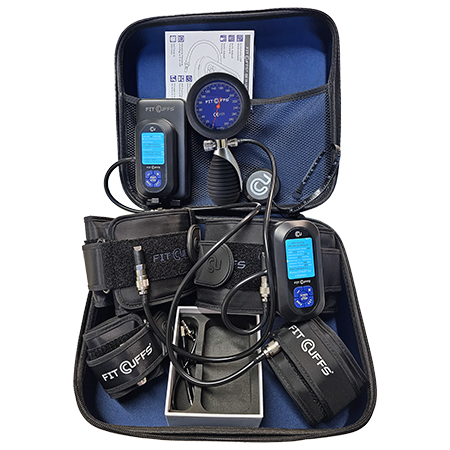
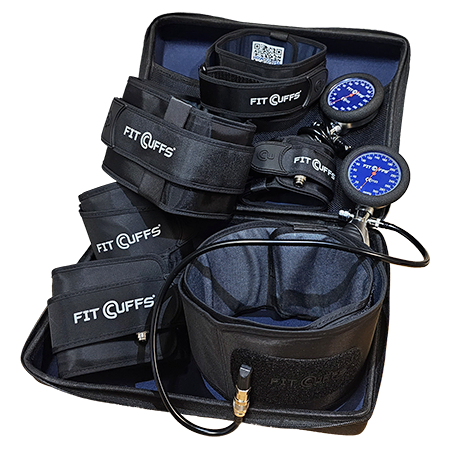
Fit Cuffs – Complete
➤ 2 x Leg Cuffs V5.0, V3.1 Or V4.0 (45-85 cm / 17.7-33.5 Inch)
➤ 2 x Arm Cuffs V3.1 Or V4.0 (20-50 cm / 7.9-20 Inch)
➤ Pressure Gauge
➤ 2 x Deflation Plugs + Measurement Tape
➤ (Optional) BFR Unit & Power Bank</p>
➤ Large Hard Carrying Case – dimensions tailored to accommodate contents -
Fit Cuffs | BFR Unit | Complete
Original price was: 713 €.445 €Current price is: 445 €.Includes
➤ 1 or 2 pcs. Fit Cuffs® BFR Unit V1.1 + Standard Length Tube (50cm / 19.6 Inch) (Basic) – Optional: in Hard Case + Long Tube (2 meter / 79 Inch)
➤ 2 x Leg Cuffs V4.0 (45-78 cm / 17.7-30.7 Inch) Black/Dark Blue And/Or Leg Cuffs V3.1 (45-85 cm / 17.7-33.5 Inch) Black/Dark Blue And/Or Leg Cuffs V5.0 (45-82 cm / 17.7-32.3 Inch) Black/Dark Blue
➤ 2 x Arm Cuffs V4.0 (20-50 cm / 7.9-20 Inch) Black/Dark Blue And/Or Arm Cuffs V3.1 (20-50 cm / 7.9-20 Inch) Black/Dark Blue
➤ 2 pcs. Deflation Plugs
➤ Optional: Velcro coated 20,000mAh – Power Bank® + Ultra-Compact charging cable(s)
➤ Optional: Wireless or Standard Pressure Gauge
➤ Standard Charging Cable (USB-A to USB-C) + 2 pcs. Deflation Plugs
➤ Large Hard Carrying Case – dimensions tailored to accommodate contents
➤ Access to the comprehensive User Manual for the BFR Unit -
Fit Cuffs | Complete
Original price was: 455 €.362 €Current price is: 362 €.Includes
➤2 x Leg Cuffs V5.0 (45-83 cm / 17.7-32.7 Inch) Black/Dark Blue And/Or 2 x Leg Cuffs V4.0 (45-80 cm / 17.7-31.5 Inch) Black/Dark Blue And/Or Leg Cuffs V3.1 (45-85 cm / 17.7-33.5 Inch) Black/Dark Blue
➤ 2 x Arm Cuffs V4.0 (20-50 cm / 7.9-20 Inch) Black/Dark Blue And/Or Arm Cuffs V3.1 (20-50 cm / 7.9-20 Inch) Black/Dark Blue
➤ Wireless Or Standard Pressure Gauge
➤ 2 pcs. Deflation Plugs + Measurement Tape
➤ Large Hard Carrying Case – dimensions tailored to accommodate contents -
Fit Cuffs | Complete x 2
Original price was: 704 €.570 €Current price is: 570 €.Includes
➤ 2 x Leg Cuffs V4.0 (45-80 cm / 17.7-31.5 Inch) Black/Dark Blue
And/Or
➤ 2 x Leg Cuffs V3.1 (45-85 cm / 17.7-33.5 Inch) Black/Dark Blue
And/Or
➤ 2 x Leg Cuffs V5.0 (45-82 cm / 17.7-32 Inch) Black/Dark Blue
➤ 2 x Arm Cuffs V4.0 (20-50 cm / 7.9-20 Inch) Black/Dark Blue
And/Or
➤ 2 x Arm Cuffs V3.1 (20-50 cm / 7.9-20 Inch) Black/Dark Blue
➤ 2 x Wireless or Standard Pressure Gauge
➤ 2 pcs. Deflation Plugs + Measurement Tape
➤ Large Hard Carrying Case – dimensions tailored to accommodate contents