
How When & Why BFR
BFR & Fit Cuffs®
From Prehab to Rehab Performance & Maintenance

Prehab ➤
Ease joint pain and even treat it by building strength and muscle mass, when conventional strength training is not an option. This is especially relevant for everyone that is to undergo surgery or even in some cases in order to avoid surgery!

Rehab ➤
Reduce “Time Loss” and accelerate “Return to Sport”. Get back to your favorite activities much sooner than expected compared to conventional rehab modalities. While injured or post-surgical, BFR allows individuals to become stronger and more resilient at a rapid rate. BFR enables an injured athlete to get back to play in only a fraction of the expected time as you can regain strength, muscle mass, aerobic and anaerobic fitness while injured!

Performance ➤
Improve sprint speed, aerobic and anaerobic capacity which is imperative for the uninjured athlete as a relevant add-on to conventional exercise and athletic training!

Maintenance
Help elderly or athletes to sustain their daily activities and prevent in-season injury such as overuse joint pain. BFR is the perfect tool when training and matches inhibit the athlete’s ability to lift heavy in the gym, wherever the goal is to sustain VO2max, muscle mass or strength!
The 4 Pillars of Blood Flow Restriction

Ischemic Pre/Post Conditioning
Short passive intervals with partial or total Limb Occlusion Pressure (90-100% LOP). – implications:
1. To attenuate loss of muscle mass when partially bedridden after surgery or during periods of load bearing restrictions.
2. Ischemic Pre-Conditioning (IPC) for improved performance.
3. Post Exercise for faster restitution and recovery aka. Ischemic Post-Conditioning.

Low-Intensity Cardiovascular Exercise
Performed continuously or as intervals with your preferred cardio vascular exercise. – Implications:
In extension of 1st application with the cuffs at 40-80% LOP doing cycling or walking when weight bearing activities are appropriate.
By applying this modality at early rehab stages, You can actually improve your muscle mass, strength and aerobic function relative to the concurrent physical condition.

Low-Intensity Resistance Training
Augment your low-load training by BFR with less joint stress. – Implications:
Primarily as a bridge towards conventional resistance training during rehab. But also applicable for the average gym rat who would like to increase or maintain strength with less load, which is especially relevant for those who wants to build or maintain muscle mass as a supplement to high-load resistance training programs.
Return To Sports & Performance
By utilizing BFR in Your sports specific activity You can improve athleticism and sports performance e.g. sprint speed, aerobic and anaerobic condition with less intensity compared to conventional performance training.
Otherwise applied as common interval training with cuff deflation in the inter-set rest periods.

FIGURE 1 – Scott et al. (2023)
An Updated Panorama of Blood-Flow-Restriction Methods

FIGURE 1 – O’Brian et al. (2022)
Potential physiological responses contributing to the ergogenic effects of acute ischemic preconditioning during exercise: A narrative review
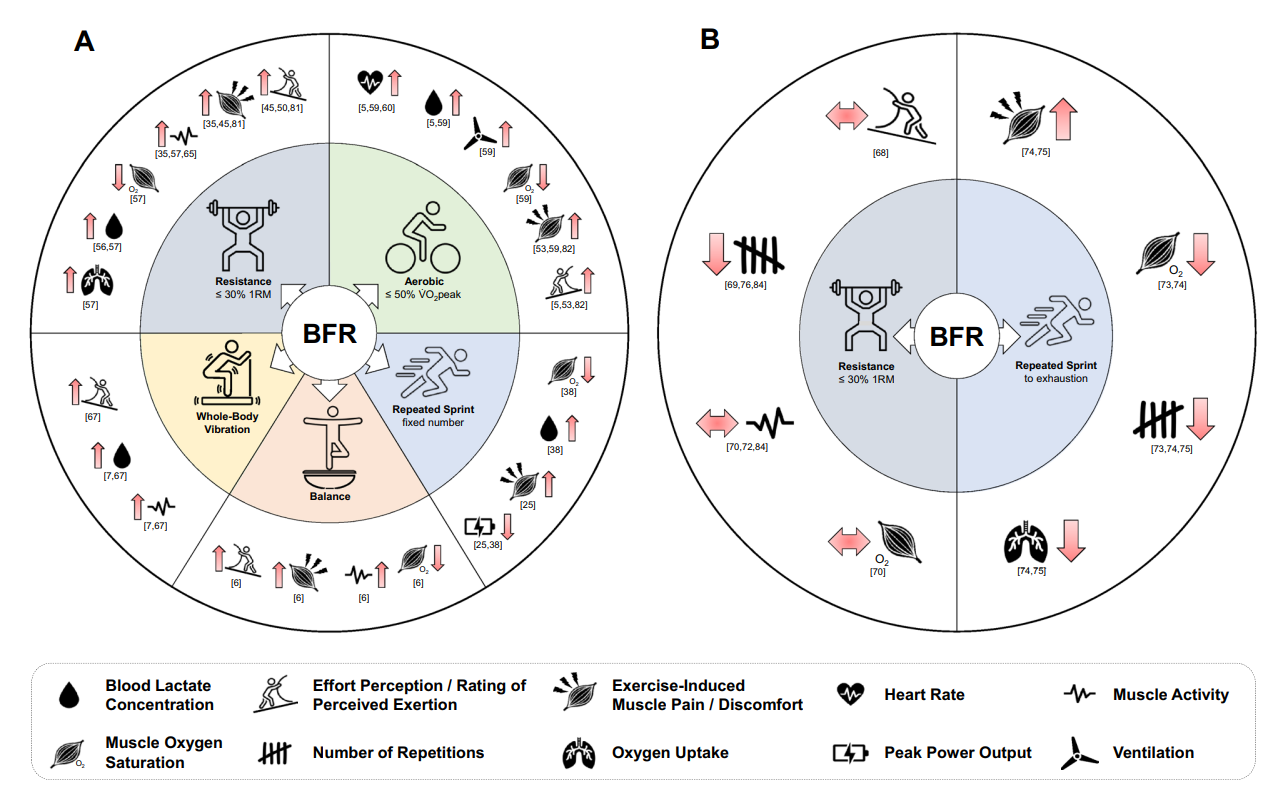
FIGURE 1 – Bielitzki et al. (2024)
Fig. 1 Schematic illustration of the infuence of blood fow restriction (BFR) on example parameters of internal and external load during several exercise modalities with (A) matched external load and (B) to exhaustion. The numbers on the individual parameters refer to the articles’ reference list
Source
- Scott et al. (2023) An Updated Panorama of Blood-Flow-Restriction Methods
- O’Brian et al. (2022) Potential physiological responses contributing to the ergogenic effects of acute ischemic preconditioning during exercise: A narrative review
- Bielitzki et al. (2023) The Discrepancy Between External and Internal LoadIntensity during Blood Flow Restriction Exercise Understanding Blood Flow Restriction Pressure as Modulating Factor
Quick Guide for Different BFR Training Protocols
- Resistance Training at about 20-50% of 1 Repetition Maximum (1RM) i.e. light to moderate load 30x15x15x15 reps with 30-45 seconds inter-set rest. Start with one or two exercises of four sets then progress up to three exercises pr. session
- Ischemic post-conditioning for improved restitution after exercise
- As a supplementation to Electrical Muscle Stimulation (EMS) in severe cases of muscle loss or difficulty in recruiting muscle, e.g. after reconstruction of cruciate ligament
- Potential add-on to Virtual Reality Rehab modalities GonioVR
When & Why BFR – Occlusion Training For Bodybuilders Only?
Blood Flow Restriction (BFR) Training aka. Occlusion Training is partial restriction of blood flow originating from 1970s Japan, where it is called Kaatsu training. It is primarily an alternative or supplement to conventional resistance training and musculoskeletal rehabilitation.
Traditionally the recommendation to develop strength is to use loads at least 60% of One-Repetition-Max (1RM). However, various research articles and Meta-analysis proves that low load exercise augmented by BFR is about as beneficial as conventional resistance training and aerobic exercise!
Bodybuilding only – not at all! In fact, there are important research on miscellaneous muscle and skeletal pathologies which proves that occlusion training (BFR Training) has significant effect on both strength and Patient Reported Outcome Measures (PROM). As a rule of thumb occlusion training is indicated if you have an acute or overload injury where you cannot do conventional resistance training i.e. lift heavy. For example, following orthopedic surgeries with absolute weight- or load bearing restrictions, or chronic conditions such as arthritis, as a many will find joint pain or joint swelling worsens during and after conventional resistance training. In such cases BFR exercises should be “first-line therapy”.
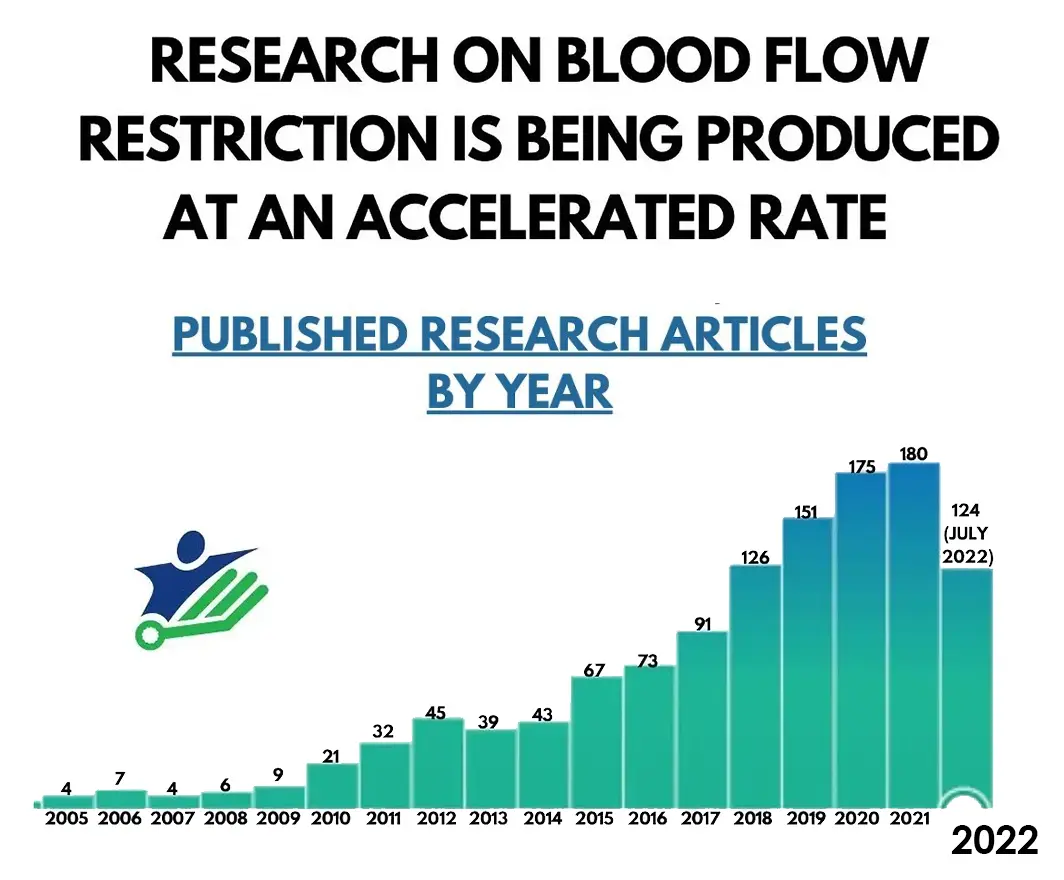
Considering the above rationale, one can wonder why only a few private or public providers offers BFR therapy? – When new exercise or medical tech emerge, thus evidence-based, the implementation is always delayed for safety reasons. But considering the amount of high quality research i.e. randomized controlled trials (RCT’s) for the last 3 decades and subsequently the vast amount of meta-analysis, BFR is here to stay and only to grow in popularity in the forthcoming. In summary, the data are rapidly expanding and Blood Flow Restriction Training has already proven its safety and effectiveness in various populations.
Click below as we present some of the articles on various musculoskeletal conditions and Meta-analysis with reference to some of the relevant literature.
Check our page "101 Research Papers" on BFR From Prehab to Rehab Performance & Maintenance
Meta-analysis - "BFR Effect" Size & Versus Conventional Exercise Modalities
Featured products
More than 6000+ units sold
-
Fit Cuffs | BFR Course | Complete
Original price was: 854 €.632 €Current price is: 632 €.➤ (Update 2024) Blood Flow Restriction – All 4 Courses One Major Package. +13 Module Online Video BFR Training Course by Dr. Nicholas Rolnick PT, MS, CSCS. Help more patients with BFR training & learn how to implement BFR Training safely and effectively with the 11.5 hour online BFR certification training course (11.75 total CEUs). Within 24-48 hours after purchase You will receive a link for the course. – Read more below
Included:
Fit Cuffs – Complete
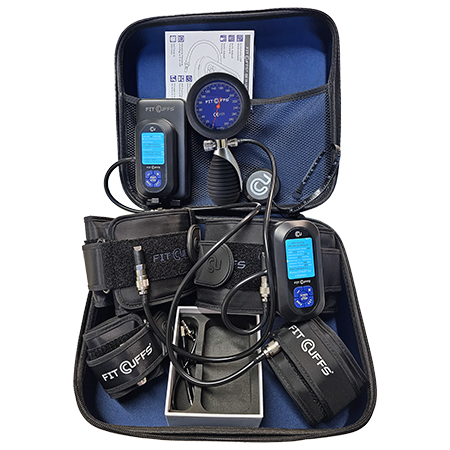
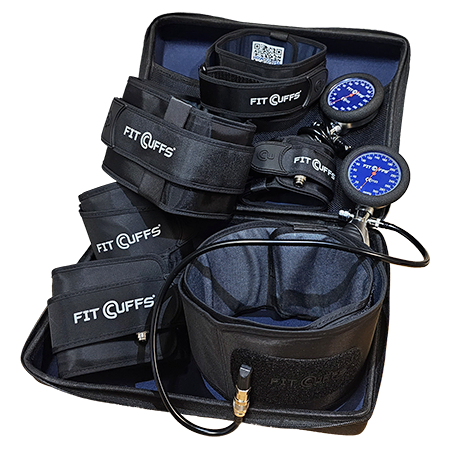
➤ 2 x Leg Cuffs V5.0, V3.1 Or V4.0 (45-85 cm / 17.7-33.5 Inch)
➤ 2 x Arm Cuffs V3.1 Or V4.0 (20-50 cm / 7.9-20 Inch)
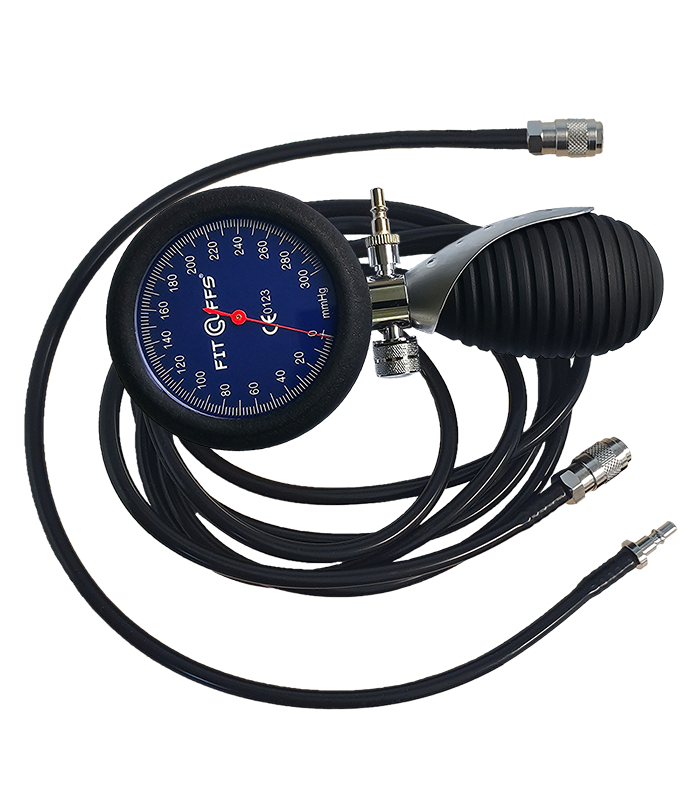
➤ Pressure Gauge
➤ 2 x Deflation Plugs + Measurement Tape
➤ (Optional) BFR Unit & Power Bank</p>
➤ Large Hard Carrying Case – dimensions tailored to accommodate contents -
Fit Cuffs | BFR Unit | Complete
Original price was: 713 €.445 €Current price is: 445 €.Includes
➤ 1 or 2 pcs. Fit Cuffs® BFR Unit V1.1 + Standard Length Tube (50cm / 19.6 Inch) (Basic) – Optional: in Hard Case + Long Tube (2 meter / 79 Inch)
➤ 2 x Leg Cuffs V4.0 (45-78 cm / 17.7-30.7 Inch) Black/Dark Blue And/Or Leg Cuffs V3.1 (45-85 cm / 17.7-33.5 Inch) Black/Dark Blue And/Or Leg Cuffs V5.0 (45-82 cm / 17.7-32.3 Inch) Black/Dark Blue
➤ 2 x Arm Cuffs V4.0 (20-50 cm / 7.9-20 Inch) Black/Dark Blue And/Or Arm Cuffs V3.1 (20-50 cm / 7.9-20 Inch) Black/Dark Blue
➤ 2 pcs. Deflation Plugs
➤ Optional: Velcro coated 20,000mAh – Power Bank® + Ultra-Compact charging cable(s)
➤ Optional: Wireless or Standard Pressure Gauge
➤ Standard Charging Cable (USB-A to USB-C) + 2 pcs. Deflation Plugs
➤ Large Hard Carrying Case – dimensions tailored to accommodate contents
➤ Access to the comprehensive User Manual for the BFR Unit -
Fit Cuffs | Complete
Original price was: 455 €.362 €Current price is: 362 €.Includes
➤2 x Leg Cuffs V5.0 (45-83 cm / 17.7-32.7 Inch) Black/Dark Blue And/Or 2 x Leg Cuffs V4.0 (45-80 cm / 17.7-31.5 Inch) Black/Dark Blue And/Or Leg Cuffs V3.1 (45-85 cm / 17.7-33.5 Inch) Black/Dark Blue
➤ 2 x Arm Cuffs V4.0 (20-50 cm / 7.9-20 Inch) Black/Dark Blue And/Or Arm Cuffs V3.1 (20-50 cm / 7.9-20 Inch) Black/Dark Blue
➤ Wireless Or Standard Pressure Gauge
➤ 2 pcs. Deflation Plugs + Measurement Tape
➤ Large Hard Carrying Case – dimensions tailored to accommodate contents -
Fit Cuffs | Complete x 2
Original price was: 704 €.570 €Current price is: 570 €.Includes
➤ 2 x Leg Cuffs V4.0 (45-80 cm / 17.7-31.5 Inch) Black/Dark Blue
And/Or
➤ 2 x Leg Cuffs V3.1 (45-85 cm / 17.7-33.5 Inch) Black/Dark Blue
And/Or
➤ 2 x Leg Cuffs V5.0 (45-82 cm / 17.7-32 Inch) Black/Dark Blue
➤ 2 x Arm Cuffs V4.0 (20-50 cm / 7.9-20 Inch) Black/Dark Blue
And/Or
➤ 2 x Arm Cuffs V3.1 (20-50 cm / 7.9-20 Inch) Black/Dark Blue
➤ 2 x Wireless or Standard Pressure Gauge
➤ 2 pcs. Deflation Plugs + Measurement Tape
➤ Large Hard Carrying Case – dimensions tailored to accommodate contents